
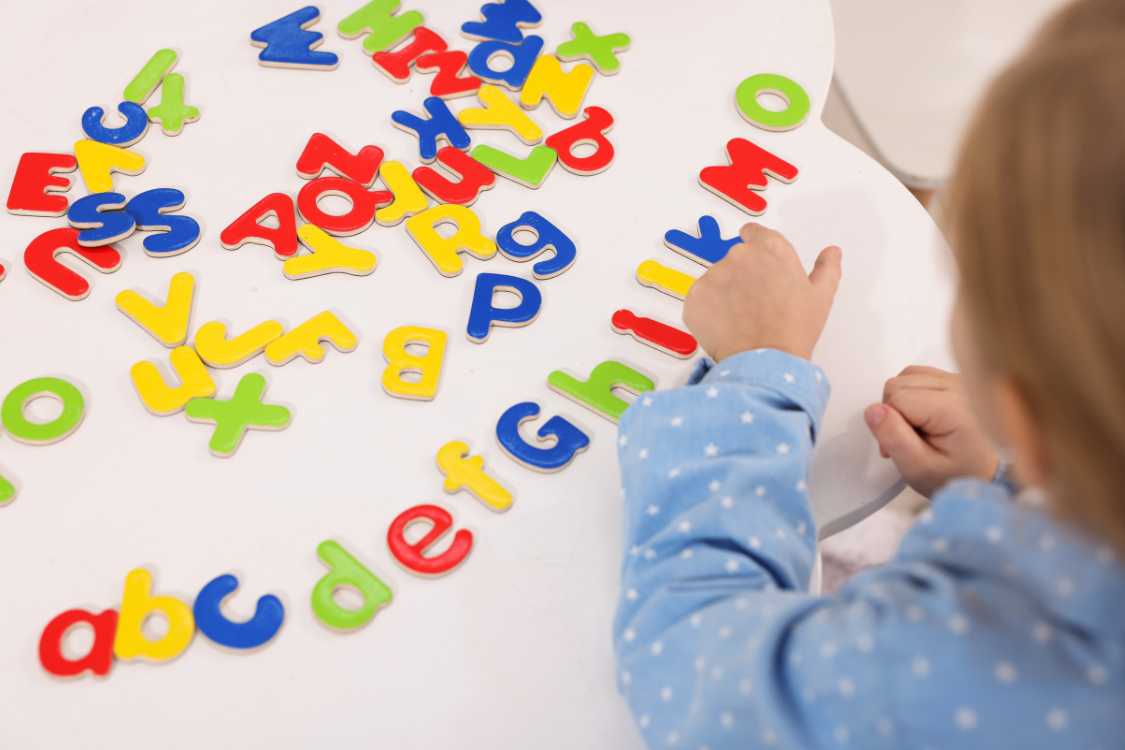
Among kindergarten teachers, word sorting holds a quiet kind of reverence. It asks for nothing more than a small pile of word cards and a child willing to look closely, yet it builds the very skills strong readers rely on. Children group words by what they share, whether a vowel sound, a spelling pattern, or a meaning, and in doing so, they learn to notice the architecture of language itself. No screens, no subscriptions, no elaborate curriculum. Just a few unhurried minutes of looking and listening, day after day, can sharpen a child’s ability to decode, spell, and recognize words on sight.
What Is Word Sorting?
A word sort is a hands-on activity where children take a small set of words written on cards and group them into categories based on a shared feature: a vowel sound, a spelling pattern, a word ending, or even meaning. For example, a child might sort words like cat, fish, tap, and ship into two columns, one for short /a/ words and one for words containing the /sh/ sound. The act of looking, listening, and deciding where each word belongs forces the brain to compare, contrast, and notice details that quick reading often misses.
Word sorts grew out of developmental spelling research at the University of Virginia in the 1970s and 1980s, led by Edmund Henderson and later expanded by Donald Bear and colleagues in the widely used Words Their Way program. The core idea is that children learn spelling and reading patterns more deeply when they discover them through hands-on comparison rather than rote memorization.
Why Sorting Works for Early Readers
Word sorts tap into orthographic mapping, the brain process that stores written words in long-term memory for instant recognition. Each time a child sorts words by sound, pattern, or meaning, they connect the letters they see with the sounds they hear, which is exactly what skilled readers do automatically. The more those connections strengthen, the faster and more accurately a child reads.
Word sorts also support what reading scientists call the self-teaching hypothesis. When children practice noticing patterns, they begin to apply those patterns to new, unfamiliar words on their own. That independent transfer is the goal of every phonics lesson, and sorting builds it through active discovery rather than passive memorization.
What the Latest Research Says
Reading science has moved well beyond simply asking how children decode. In 2021, researchers Nell Duke and Kelly Cartwright introduced the Active View of Reading, which expands on the older Simple View by identifying bridging skills that connect word recognition and comprehension. One of those bridging skills is graphophonological-semantic flexibility, or GSF, which is the ability to think about a word’s letters, sounds, and meaning at the same time.
Researchers measure GSF using a sorting task. Children sort word cards into a two-by-two grid by both initial sound and meaning, then explain their groupings. A 2024 study in Applied Neuropsychology: Child found that children with dyslexia performed less accurately on this task than typically developing peers, and that sorting accuracy strongly predicted reading comprehension. The very act of sorting words by multiple features appears to strengthen the cognitive flexibility that skilled readers rely on every day.
This finding aligns with longstanding guidance from the IES Practice Guide on foundational reading skills, which recommends teaching students to decode words, analyze word parts, and recognize words as connected processes. Word sorts hit all three at once.
Types of Word Sorts to Try at Home or in the Classroom
There are several kinds of sorts, each targeting a different skill. Sound sorts ask children to group words by the sound they hear, such as separating short /a/ words from short /i/ words. Pattern sorts focus on spelling, like grouping words by whether they end in -ck or -k. Meaning sorts categorize by topic or word relationships, which builds vocabulary alongside decoding.
Sorts can also be open or closed. In a closed sort, the adult tells the child what categories to use. In an open sort, the child decides on their own how to group the words. Open sorts are particularly powerful because they reveal what the child actually notices, and they invite a quick, productive conversation when the categories don’t match what you expected.
A well-designed sort uses six to fifteen words at a time. Keep sessions short, around five to ten minutes, and revisit the same sort across the week to build automaticity. Always finish by asking the child to read the words aloud and explain why they belong in each group. That moment of explanation is where the real learning happens.
For struggling readers, start with just two contrasting categories and very simple short-vowel words. Children with dyslexia often benefit especially from the visual and tactile experience of moving cards by hand, which gives the brain multiple pathways to anchor each pattern.
A Simple Tool With Modern Research Behind It
With reading scores at historic lows and families looking for practical ways to help, word sorting deserves a place at the top of the list. It’s simple, low-cost, grounded in decades of research, and aligned with the newest models of how the brain learns to read. For more practical strategies, app reviews, and evidence-based phonics tips for your emergent reader, visit Phonics.org and explore the latest articles.
