
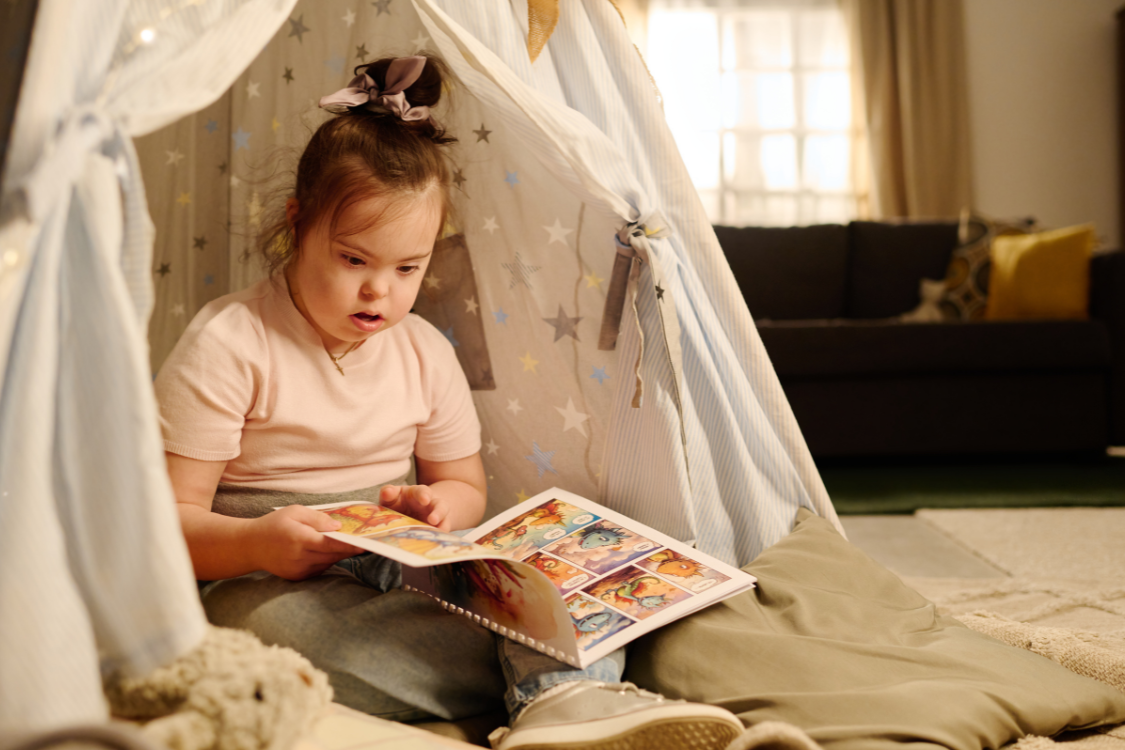
Imagine it: a child with Down syndrome proudly reading their favorite book aloud, pointing to each word with growing confidence. This isn’t just a hopeful dream. It’s an achievable reality. For decades, many believed children with Down syndrome couldn’t learn to read beyond basic sight words. Today, we know better. With the right approach, these remarkable learners can become strong, capable readers who genuinely love books.
The journey to literacy looks different for every child, but children with Down syndrome bring unique strengths to the reading table. Their excellent visual memory skills and strong social awareness create powerful tools for learning. When we understand how to work with these strengths while building phonics skills systematically, amazing things happen.
Understanding How Children with Down Syndrome Learn Best
Children with Down syndrome typically show stronger visual learning abilities than auditory processing. This means they often remember what they see more easily than what they hear. Think of it like having a really good camera in their brain for pictures and written words, while the sound recording device needs a bit more support.
This doesn’t mean phonics instruction won’t work. It absolutely does! It just means we need to approach it thoughtfully. Research confirms that children with Down syndrome learn to read using the same foundational skills as all children: phonics, phonemic awareness, fluency, vocabulary, and comprehension. The key is giving them more time, more repetition, and combining visual supports with systematic phonics instruction.
Many children with Down syndrome also experience some degree of hearing loss, which can affect their ability to distinguish between similar sounds. This makes explicit, direct instruction in letter-sound relationships even more important. When we clearly demonstrate how sounds connect to letters, repeat these connections frequently, and provide visual supports, children can develop solid phonics skills.
Start with What Works: Sight Words and Personal Connections
One effective approach begins with sight words, especially words that matter personally to your child. Starting with names of family members, pets, favorite foods, and beloved activities creates immediate meaning and motivation. When a child successfully reads “Mom,” “Dad,” or “pizza,” they’re not just recognizing letters. They’re connecting reading to their world.
Using flashcards, personal photo books, and familiar objects helps build that crucial first vocabulary of 50-100 sight words. This foundation creates early success and confidence. Children feel capable and excited about reading, which fuels their willingness to tackle the more complex work of phonics instruction.
The “Match, Select, Name” method works beautifully here. Children first match word cards to pictures, then select specific words when asked, and finally name the words independently. This errorless learning approach, where adults guide children to the right answer rather than correcting mistakes, keeps reading positive and stress-free.
Build Phonics Skills Through Systematic Instruction
Once children have that foundation of sight words, it’s time to introduce systematic phonics instruction. This means teaching letter sounds in a logical order, starting with the most common and useful letters first. Short vowel sounds typically come before long vowels. Simple consonant-vowel-consonant words like “cat,” “dog,” and “sun” provide excellent early practice.
The secret is repetition without boredom. Children with Down syndrome often need many more repetitions than typical learners to solidify new skills. This is where creativity matters. Use songs, games, magnetic letters, sand trays for tracing, and computer programs. Mix up activities to keep practice fresh while the learning objective remains constant.
Breaking down digraphs, letter combinations like “sh,” “ch,” and “th” into manageable pieces helps tremendously. Point these out during everyday activities: “Look, ‘shop’ starts with ‘sh’!” Make it a treasure hunt to find “sh” words around the house. This embedded learning, woven into daily life, provides the repetition children need without formal sit-down lessons.
Make Reading a Family Affair
Reading instruction doesn’t have to happen only at a desk or during designated “school time.” Some of the most powerful learning occurs naturally throughout the day. When cooking together, read recipe words aloud. During grocery shopping, point out labels and signs. At bedtime, read favorite stories and talk about what happened.
Ask comprehension questions in simple language: “What was your favorite part?” or “What happened first?” These conversations build understanding while reinforcing that reading has meaning and purpose. When children see reading as useful and enjoyable rather than just a school task, they engage more deeply with the learning process.
Your Child Can Become a Reader
Teaching phonics to students with Down syndrome requires patience, consistency, and faith in their abilities. Progress may look different and take longer, but every small achievement matters. That first decoded word, the proud smile when they recognize a letter sound, the growing independence as they tackle new books. These milestones represent real, meaningful progress.
Children with Down syndrome absolutely can learn to read. With systematic phonics instruction combined with sight word knowledge, plenty of repetition, visual supports, and lots of encouragement, they develop literacy skills that open doors to learning, communication, and independence.
For more research-based strategies, helpful program reviews, and practical phonics activities that work for all learners, visit Phonics.org. Together, we can help every child experience the joy and power of reading.
