
A Guide to Teaching Letter Sounds Effectively
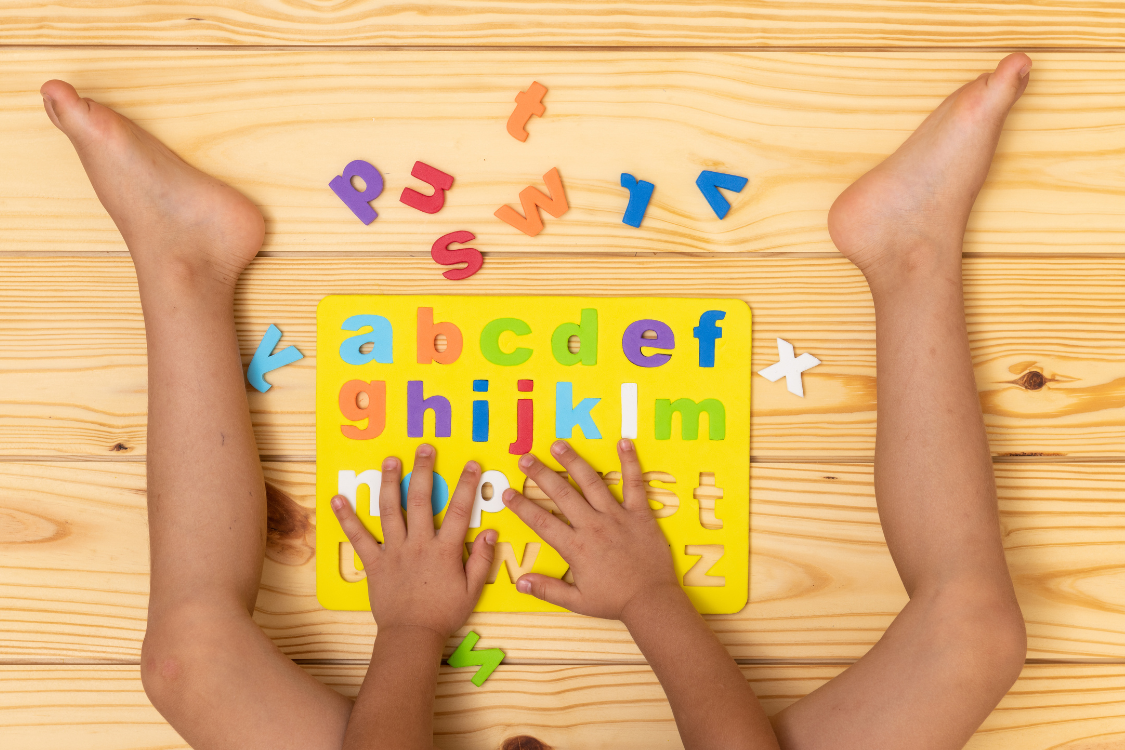
Knowing the connection between letters (graphemes) and sounds (phonemes) is one of the first concepts your child will have to grasp as they begin their reading journey. Knowing which letters represent which sounds of speech (and vice versa) is crucial to overall literacy success.

What’s the best way to teach letter sounds and how can you help your child start learning the alphabet effectively? Discover some practical tips from phonics.org below.

How Children Learn the Sounds of the Alphabet

Before children can develop the phonics skills they need to read and learn on their own, they first need to implement the alphabetic principle. This principle is the knowledge of how individual letters and combinations of letters are used to represent sounds of spoken language.

This principle is most effectively taught when:

  • Instruction happens in a fun, positive environment
  • A structured, systematic approach is used
  • Children have developed some phonemic awareness skills
  • Letters are provided in context (in the classroom, at home, during play)
  • Each letter sound is taught in complete isolation (for example, <P> makes the /p/ sound, not /puh/.)
  • Letter-sound correspondences are practiced consistently with modeling, guidance, and feedback from educators

Some kids may pick up letter-sound correspondence quickly whereas others might benefit from a multisensory approach that suits their needs. 

A common example of these learning differences is that some children might have an easier time learning sounds (i.e., ‘truck’ begins with the /t/ sound), while others may find it more natural to identify letters first and then learn their sounds (i.e., this is the letter <A> which makes the beginning sound of ‘apple’).

If your child leans toward one process over the other, start there! But remember to be consistent, review previously learned letters, and cover all letter sounds.

Beginner Phonics: Letter Sound Activities for Kids

Learning English alphabet sounds involves more than just flashcards and verbal repetition (although that can be part of it). Children learn best when they use multiple senses, activating different parts of the brain during literacy development

Multisensory learning works well with letter-sound instruction. This involves sight, sound, and touch. Some activities may focus on one but often include multiple. All are important for the developmental process. Let’s cover some examples.

Tactile Activities to Teach Letter Sounds

Hands-on letter sound activities help your child engage in educational play using movement and touch, building a stronger awareness of the letters they’re learning. Here are some ideas.

  • Playdough letters: On a sheet of paper, outline a large, individual letter using paint or a thick marker. Tell your child what letter it is and ask them if they know what sound it makes. If not, show them and have them repeat. Give your child playdough to roll or squish with their hands and fill in the letter. While they fill in the letter, come up with words together that start with that letter sound.
  • Match items to their sounds: Arrange several toy letters on the floor. Grab a few of your child’s favorite items that begin with those letters and lay them out. Play a game with your child to see which items they can match to the corresponding letter sounds.
  • Finger tracing: Have your child trace a letter using their finger. This can be done using sand, finger paint, or on a touchscreen device.
  • Finger Cues: Use a simple, consistent finger cue in association with a single speech sound. Practice using the cue every time your child says the sound or sees the letter. 

Playing tactile letter-sound activities that are fun and personal can help your child stay engaged.

Auditory Letter Sound Activities

Teaching alphabet sounds requires verbal and auditory games! Kids need to hear, repeat, and experiment with the language sounds of each letter. 

  • “I Spy”: In addition to learning the names and sounds of letters in print, your child should practice matching letter sounds to items in real life. “I Spy” is a fun game that activates kids’ curiosity, imagination, and existing knowledge of the alphabet. Take turns using the “I Spy” prompt with your child. For example, say, “I Spy something that starts with the sound /f/.” Your child may identify things like fridge, flower, fork, etc.
  • Letter sound songs: Singing songs that help kids practice letter sounds is a classic and effective learning activity. The song Apples and Bananas is a popular example.
  • Words that share sounds: Share a letter and its sound with your child. See if they can come up with other words that begin with the same letter. For example, your word is ‘mat’. They can match the beginning /m/ sound with words like ‘mom,’ ‘milk,’ ‘mine,’ etc. 
  • Articulation: Children learn to pronounce different sounds at different developmental ages. Showing your child how to make a specific sound accurately will help them associate that sound with a letter. Consult a speech language pathologist if you are concerned your child isn’t meeting developmental milestones with the pronunciation of speech sounds.  

Verbal letter games can be played anywhere, any time. Make it fun and practice while at home, at the park, at the grocery store, and other everyday settings.

Visual Activities to Teach Letter-Sound Correspondence 

Children learn to visually identify letters at their own pace. By kindergarten, some kids might know the entire alphabet while others are just beginning to learn the letters in their names. Either way, give these visual letter exercises a try.

  • Alphabet books: There are many children’s alphabet books that help you practice letter identification and letter sounds at home. Look into age-appropriate books that support your child’s skill level including Eating the Alphabet and Llama Llama ABC.
  • Name the letter: Use posters or flashcards to help your child review letters and their sounds. You can start with cards with uppercase/lowercase letters and related illustrations (like a honey bee on the card for the letter <B>). As your child learns more letter sounds, remove the illustration component and review the letters themselves. 
  • Embedded Picture Mnemonics: Some evidence supports the integration of letters with a picture that begins with that word. For example, see the embedded picture mnemonics created by artist Cat MacInnes. 

Practice visual letter identification and letter sounds together. This is called Paired-Associate Learning. Repetition helps your child remember what they’re learning and build confidence in what they already know! Remember to switch things up and practice multiple activities that involve their other senses. 

More Activities to Teach Kids Phonics

There are many ways to help your child learn letter sounds as they lay a solid foundation for reading success. With evidence-based instruction methods, plenty of encouragement, and diverse learning opportunities, your child will grow into an empowered learner!

To discover more tips and interactive activities that support early readers, explore the resources at phonics.org.

What is Phonics? An Introduction for Parents and Educators

Anyone who can read and write in an alphabetical language has mastered an important set of skills. They know the connection between letters and the sounds each one represents. They can decipher letter and word combinations when reading and encode which sequence of letters to spell when writing. Understanding these letter-to-sound principles is one of the most important aspects of literacy; a precious ability of human communication.

If you’re reading this, congratulations! You’ve already mastered these skills in English. You likely learned them through phonics instruction, although you may not remember how. 

If you’re an educator or parent who’s helping a child learn to read, you might find yourself wondering: what is phonics? And how should I be teaching it? 

In this guide, we’ll refresh your memory and explore what phonics instruction is meant to be. 

Phonics and the Reading Pyramid

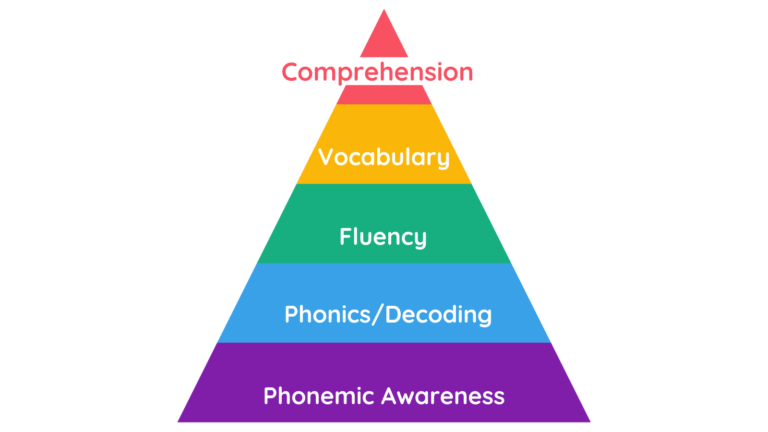
Phonics is one of the foundational pillars of the reading pyramid. Once children understand the sounds of their language and how to verbally manipulate words (phonemic awareness), they can gradually move up the pyramid. 

With continued instruction, they move up the pyramid to build fluency—the ability to read with ease, accuracy, and expression. As they grow in fluency, children build their vocabulary. Eventually, they develop all the essential reading skills and can experience reading comprehension with little adult guidance.


How Phonics Works 

Phonics instruction builds knowledge about letter-sound correlations in reading and writing. It is simply, “the relationship between speech and print” (Beck, 2006, p.16).  It is an umbrella term for several important skills children acquire through development and instruction.

Learning the Sounds of Language 

Phonemic awareness, or the ability to hear, recognize, and manipulate the different sounds in language, develops in a child’s early years of life. It sets the foundation for spoken language. 

The more that children develop and engage in literacy activities with family members, they develop pre-reading skills. They learn things like concepts of print, rhyming, several alphabetical letters, and more. Soon, they’ll be ready for phonics instruction to begin. 

The Alphabetic Principle

Before kindergarten, children typically start learning the alphabetic principle. This is the understanding that words are made of letters. It’s the concept and practice of connecting letters with their corresponding sounds (otherwise known as a “grapheme-phoneme correspondence” or GPC). Children often learn the alphabet song and know that the letters make certain sounds, like the letter <m> representing the sound /m/. With early phonics instruction, they gradually learn, for example, that the letters <ch> make the /ch/ sound as in ‘chocolate’ and /th/ is the beginning sound of the word, “thanks.”

Blending Letter Sounds to Form Words (Decoding)

The more grapheme-phoneme correspondences a child knows, the more they can practice blending. Phoneme blending is combining individual letter sounds in a word to read the whole word. This can also be called sounding out or decoding. During instruction, a child might come across a new word. The child can blend the sounds such as  /m/ /a/ /t/ to read the whole word, ‘mat’. 

Segmenting Words into Letters (Spelling/Encoding)

Inversely, children learn segmenting in phonics instruction, which is the opposite of blending. Kids learn early spelling techniques when they can spell their names, loved ones’ names, and simple words based on the individual sounds that make up a word. For example, if a child wants to spell ‘skip’ but doesn’t know how, they can gradually segment the word into its individual phonemes from start to finish: /s/ /k/ /i/ /p/.

Types of Phonics Instruction and Their Efficacy 

There are four different types of phonics. Any phonics instruction for early readers is better than no phonics instruction at all. However, some methods do have more efficacious results than others. 

Regardless of the approach in the type of phonics, instruction should be explicit and systematic. This means determining a pre-established sequence or “scope and sequence” to directly teach phonics concepts. In this way, children can start learning with easier concepts and slowly increase complexity in different stages. 

Synthetic Phonics

Synthetic phonics teaches the association of individual language sounds (phonemes) to alphabetical letters (graphemes). Then, learners are explicitly taught to “sound out” each letter and then blend the sounds to form the whole word. For example: the letter sounds /s/ /a/ /t/ are blended to decode the word ‘sat’. 

There is research-based evidence that synthetic phonics is the most efficacious type of phonics to use when teaching children to learn to read. Moore (2021) says, “It is sensible to employ an approach that makes the systematic instruction and revision of sound-spelling correspondences most comprehensible for both teachers and students. Synthetic phonics offers the simplest way to achieve this” (p. 24). 

Analogy Phonics

Analogy phonics is a top-down approach. This means the instruction starts with whole words instead of individual sounds. In analogy phonics, common “word families” or “rimes” are used to

learn words instead of blending individual letter sounds. It starts with a word a child already knows (sat), breaks them down into the onset and rime (s-at, c-at), and then introduces similar words in that pattern (mat, fat, rat, pat, etc.).

Analytic Phonics

Also known as implicit phonics, analytic phonics teaches kids to process a new word by “analyzing” its parts (phonograms) and relating them to previously learned words. For example, a child may know the words cat, sad, ran, and mat. When presented with the new word, rat, they must sift through what they know— c/at/ + m/at/ + /r/an— to conclude /r/ + –at is ‘rat’. 

An analytic phonics approach may not be effective for all children. Typically children perform better on reading and spelling with a synthetic phonics approach. 

Embedded Phonics

The embedded, or incidental, phonics method provides reading instruction using whole texts. It is based on a theory of reading instruction called “whole language.” Instead of teaching explicit, systematic phonics skills, it requires opportunistic learning through practices like sight words (the, it, and, was, etc.) and context clues (words, letters, or pictures that hint at meanings or other words in the sentence). 

Embedded phonics practices are often considered “real world” reading but can hinder a child’s decoding skills, which are essential for reading new words. Relying on context clues is considered a bad habit as it can stunt overall literacy development.

Phonics, Explained Simple Enough for a Child to Understand 

Reading is like a fun treasure hunt. You can explore all sorts of stories and ideas to find the golden nuggets you’re looking for, and sometimes, discover amazing prizes you never imagined. This treasure hunt happens in the world of words, where endless adventures of learning and imagination live. 

But when children first enter the world of words, they don’t know where to go. Everything looks squiggly and confusing because this world is made of secret codes. These secret codes are letters of the alphabet. 

The first adventure is to learn to crack the code, which is what phonics teaches. Every letter makes a special sound; many of them you already know how to speak. Every time you learn a new letter and the sounds it makes, you crack another piece of the code. 

As you learn more of these letters and their sounds, you’ll be able to decode words. Soon, the world of words will come to life and you’ll collect many treasures as you explore. With practice, you can enjoy new and exciting treasure hunts for life.

Resources to Help a Child Learn Phonics

There are countless phonics programs available today. But like the different phonics instruction methods, not all programs are the same or offer the best results.

To help you decide which phonics programs might help your child learn, phonics.org offers: 

  • Educational articles and guides: Gain a deeper understanding of phonics principles, teaching strategies, and best practices.
  • Phonics program reviews: Compare expert-reviewed assessments of popular phonics curricula to help you make an informed decision.
  • Fun phonics activities and games: Browse the top resources that make learning phonics fun and interactive.

Whether you’re teaching your child at home or a group of students in a classroom, there are affordable, effective phonics programs to help their learning process. Explore the resources at phonics.org to find the right one!

Have a phonics program or app you’d like us to review? Reach out to us at [email protected] to let us know.
