HOMER Learn and Grow App Review

HOMER Learn and Grow is an educational app tailored for children ages 2 to 8. The app boasts a diverse range of activities and aims to cover key developmental areas such as reading, math, social-emotional learning, creativity, and thinking skills. 

In this review, let’s take a closer look at the quality of literacy instruction in the app so you can decide whether or not it’s worth using in phonics instruction.

The Learning Path in HOMER 

The learning path of HOMER takes children through a series of lessons that gradually build upon their knowledge. Overall, it’s personalized and systematic but can improve its parent involvement. 

Systematic Instruction

HOMER Learn & Grow takes a personalized approach to learning with an introductory quiz that helps determine each user’s starting point and their appropriate learning path. This ensures that the educational content is developmentally suitable, adapting to the unique needs of users with different ages and ability levels. 

The “Learning Path” is an easy-to-follow line and indicates that the instruction in this game is systematic. Systematic instruction means that there is a carefully pre-planned sequence of skills that will be introduced and practiced. These skills will move from easier to more difficult as the game progresses. 

There is also a “practice” area for players to leave the path and practice specific skills. The HOMER app explains why they have chosen this approach and clearly shares the evidence that supports it. 

Transparency and Communication

While it is commendable that the app has a clear learning plan, it could be more transparent with educators and parents about the details of this learning path. Sharing a description of skills along the learning path or a “Scope and Sequence” would improve communication about specific learning goals for children. 

Phonemic Awareness Activities 

Phonemic awareness is the ability to work with individual speech sounds (phonemes) in language. It is a foundational skill for learning to read. HOMER has many activities and methods that help new readers improve this important skill. 

Practicing Letter Sounds

The foundational skill of phonemic awareness is addressed by the HOMER Learn & Grow app, particularly in its introduction of letter sounds. The app excels in its letter sound accuracy, presenting clear and precise representations of phonemes.

Note: the letter sounds within the HOMER app are delivered (and limited) to an audience that speaks American English. 

Learning Short Vowel Sounds

Knowing vowel sounds is crucial to literacy development. Every word has a vowel sound. Children cannot read any word without first knowing vowel sounds. Short vowel sounds are a common place for new readers to get stuck. The HOMER App has a great deal of practice and repetition in recognizing, producing, and hearing these sounds, which is truly valuable in learning to read. 

Sound Articulation Exercises 

Another admirable feature of HOMER is its inclusion of facial animations that show users how to articulate sounds. This type of modeling can be helpful for children learning to make new speech sounds or identify them in words. 

While the app successfully incorporates these visual aids, it’s worth noting that the quality of the facial animation may fall short in providing detailed assistance. This feature could be improved by increasing the detail in the animation, showing a real mouth making the sound, or including a short description of what the tongue, teeth, and lips are doing to make each sound. 

The game also has a feature where a child can listen to a specific sound and then record themselves repeating that sound. Then, they can listen back to how they made the sound. This is a fun and helpful way for children to be able to hear how they make a sound and how it compares to the sample sound. 

However, any sound, no matter how inaccurate, can be recorded and practiced by the child. The game will give positive feedback for any articulation of a sound, even an incorrect or completely unintelligible one. Therefore, parents and educators should monitor this gameplay and consult with a speech-language pathologist (SLP) if they have concerns about speech production or articulation for their child. 

Teaching Letter Formation

An important skill in early literacy is learning how to print letters. The HOMER Learn & Grow app introduces letter formation through videos that model the formation of the letter while a child’s voice narrates what they are doing to make the letter. This is referred to as a ‘verbal path’ for the formation of letters and can support a child’s memory of how to form that letter. There are also opportunities for children to trace a letter with an animated line guide. 

Accuracy of Letter Formation 

Unfortunately, HOMER’s model videos and tracing games do not follow common letter formations approved and used by occupational therapists and educators. This can cause children to practice letter formation in an inaccurate way or a way that won’t align with what’s taught in schools. 

This is especially important for the formation of the letters <b> and <d> as they are so often confused by children. Additionally, the game accepts and rewards many formations of the letter, even inaccurate ones. Parents and educators should carefully monitor this part of the game to see that letters are made appropriately and accurately. 

Reading Practices 

When it comes to reading, the HOMER app offers several learning activities that follow specific types of phonics instruction.

Synthetic Phonics

The HOMER Learn & Grow app uses synthetic phonics to teach children to read and spell. Synthetic phonics uses individual letters and sounds that are blended to read words. It’s a simple, logical, and evidence-based method of teaching reading and spelling. 

“Tap to Read” Decoding Exercises

The HOMER app has a “Tap and Read” game where players tap individual letters in a word to hear their sound. Then, the sounds are blended to read a word. 

In the app, blending is first done slowly while visually represented by a sloth on roller skates gliding under the letters as the sounds are repeated. Then the word is blended more quickly, which is shown with a hedgehog on roller skates gliding under the letters. The player can click on the sloth and hedgehog to repeatedly hear the slow and fast blending of the sounds into a word. 

This game does a great job of visually representing and modeling what phoneme blending is and how words can be ‘sounded out’. That said, this game can be quite passive for new readers since it blends the words for them. Parents or educators should encourage their children to participate and verbally blend the sounds into words along with the characters on screen. 

Continuous Texts and Story Reading 

The HOMER app has a “Stories” feature which includes classics like Where the Wild Things Are and other books that match the interests of each child or student. The learner in the app can choose to read these books on their own or have them read out loud. These story-reading options are a great feature of the HOMER app, supporting a child’s motivation and comprehension in early reading.

Early Readers

There are also books along the “Learning Path” in the reading section of the app. The first reader is called The Boys Like to Run. Many of the words in this book, such as “run”, are decodable. This means the child has been taught how to blend sounds together and those practice words are in the book. This helps children practice their new decoding skills in connected text. 

Unfortunately, many words in the first book are irregular, referred to as “sight words” on the app. To read this first book, a child would need to know how to sound out some CVC (consonant-vowel-consonant) words, have nine words visually memorized, and be able to connect these words in a sentence. This may be a challenging task for some children. Simple changes like replacing the word “boys” with “kids” in the book would increase its decodability and increase the confidence of a reader attempting their first independent reading of a book.  

The HOMER app also asks to record the learner reading the decodable sentence out loud. While the recording may be helpful for a child to think about their fluency in reading a sentence, the app does not check for accuracy. It also praises the child for any attempted answer. Again, it is best to have adult supervision to see that a child is practicing reading correctly. 

Spelling Lessons

HOMER Learn & Grow impressively integrates effective early spelling instruction within its platform. The app uses Elkonin boxes in a gamified format, providing a dynamic and interactive learning experience for young readers. 

The inclusion of Elkonin boxes is a notable pedagogical choice, as it aids in modeling the segmentation of words into their distinct phonemic components. The instructions in the game present a whole word and then clearly segment the word into its individual parts. The explicit modeling of segmentation is an important phonemic awareness skill necessary for early spelling. 

HOMER’s commitment to mixing educational content with interactive gameplay proves to be a valuable asset in making early spelling instruction both enjoyable and effective for kids.

Is the HOMER Learn & Grow App Worth It?

HOMER Learn & Grow stands out as an easy-to-use and enjoyable educational app for young learners. 

Its incorporation of a systematic synthetic phonics (SSP) approach for both decoding (word-reading) and encoding (spelling) contributes to a robust foundation in literacy skills. The app successfully combines fun and cuteness with educational content, creating an engaging learning environment. 

However, there are a few drawbacks. Though it may seem like a child could use Homer independently successfully, certain features don’t provide the necessary feedback to be effective.  This means that adult supervision is required in certain features like the articulation of letter sounds or encouraging active participation in sounding out words. Additionally, some changes could be made in early books in the app to build competence and confidence in kids learning to read. 

Lastly, there is room for improvement in the app’s accuracy of letter formation. Addressing these concerns could further enhance the overall effectiveness and appeal of HOMER Learn & Grow for a wider range of young learners.

To learn more and compare phonics apps like HOMER Learn and Grow, check out the resources at phonics.org.

Methods of Effective Decoding in Reading

When children are learning to read, they must be taught how to “sound out” letters and blend them together to form words. If you’re a parent or teacher, for example, you’ll likely hear your child put together the word ‘dog’, saying /d/ /o/ /g/ … “dog!”

This process is called decoding

Decoding is an important practice in reading development and one that is required for literacy. By definition, decoding is the translating of printed words into speech by sounding out each letter to form the word. 

Some children pick up decoding quickly and easily, whereas others struggle to decipher new words. It can be a frustrating phase for a child but it doesn’t have to be. 

To help your phonics students master this crucial skill in their literacy journey, here’s what you should know about effective decoding in reading.

Learning Effective Decoding Strategies 

Decoding is an aspect of systematic phonics instruction. To understand these strategies, children should already have some phonemic awareness skills, including the ability to blend individual sounds into words. 

1. Letter Sounds

While not an explicit decoding strategy in itself, learning the alphabet and letter sounds is the precursor to decoding. Children must be able to identify letters in print correctly and correlate the appropriate sounds to each letter. If a child struggles with early decoding methods, they may still need to develop their understanding of how letter sounds (phonemes) are represented by letters (graphemes). 

2. Simple to Complex 

Begin decoding instruction by teaching children to read simple words and then move to more complex words. For example, many reading programs begin with consonant-vowel-consonant (CVC) words like ‘cat’. Once the child can read these types of words with ease, they can start to practice decoding words with consonant blends like ‘sand’ or ‘blast’. 

Introducing a complex word like ‘giraffe’ or ‘yacht’ when a child is just learning to decode can be frustrating! Building decoding skills in a step-by-step way helps children strengthen their competence and confidence when learning to read. 

3. Blending 

To make sense of new words, children combine letter sounds to form the full word. This is called blending. As an example, when a child sees the word ‘map’ for the first time, they must identify the letter and sounds in the word and then put them together to read the word ‘map.’

There are multiple methods of phoneme blending. The easiest way to blend is called continuous blending, or connected phonation. This strategy works well with continuous sounds like /m/ that can be held or elongated. Continuous blending is where the sounds are blended together without stopping in between. For example, reading the word ‘moss’ may sound like ‘mmmmmmmmoooooooooosssssssssss’. The sounds can be repeated and sped up to read words. 

Blending is used in early reading but remains an important skill for life! It’s one of the most empowering skills in literacy development. Even through adulthood, readers use blending to decipher advanced, unfamiliar words and expand their vocabularies. 

4. Chunking 

Sometimes children come across familiar parts of a word with a new prefix or suffix. A child may know the word ‘want’ but come across the word ‘unwanted’ for the first time. They may recognize ‘want’ but then segment the sounds -un and -ed to then blend the whole word, ‘unwanted.’ 

As readers learn more advanced words that contain multiple syllables, this strategy—called chunking—can be used as a way to help decoding. Building a child’s understanding of affixes will support their ability to break a word into its smaller parts. It can be used to help them demonstrate spelling patterns, read longer words, and notice root words.

5. Syllable Splitting  

Also called syllabication, syllable splitting helps children read longer words when decoding. The word ‘definition’ can be a complex word to decode for the first time, so breaking it down into syllables may make it easier to pronounce and understand: de-fi-ni-tion, pronounced /de/ /fi/ /ni/ /shun/. 

Some children may need help with syllables in the decoding process. Using lines or symbols to split syllables can help a student visualize the correct pronunciation.

Strategies to Help Kids Practice Decoding 

Like all aspects of phonics instruction, decoding should be taught explicitly and systematically while still being approachable and engaging for students. 

To build the necessary decoding skills for a child, try to make it fun! Use games, activities, songs, and interactive stories to instill these important reading techniques. 

As a teacher or parent, model correct decoding strategies for your child or students and don’t hesitate to guide them when they get stuck. For a hands-on learning experience that supplements classroom instruction, use an educational phonics app that includes fun decoding exercises or games.

Common Decoding Challenges and Mistakes 

Every child learns to read at their own pace, so don’t worry if a student faces decoding challenges. It’s expected that they’ll make mistakes, especially during early reading. As reading skills grow, many children may struggle with irregular words, digraphs, or silent letters at first. 

Reading is a sophisticated skill that takes time, explicit instruction, effective practice, and lots of encouragement. Acknowledge your child’s struggles and strengths. Let them know it’s okay to mess up and try again. Remind them that they’re still learning and celebrate their dedication to getting better. 

If a student really struggles or falls behind in their decoding skills, you can seek insight from a phonics educator or reading specialist who uses proven instructional methods. There may be an underlying issue that needs to be addressed before the student can progress in their literacy development.

Resources to Teach Decoding Skills in Phonics Instruction 

When kids learn decoding in a systematic way, they build foundational literacy skills. Mastering these skills at each new level of reading is an exciting, empowering experience that every child deserves. 

Whether you’re helping your kindergartener practice decoding at home or teaching a class of third graders more advanced words, you need to know how to provide explicit instruction in decoding. There are helpful resources available that equip children to take the next necessary step toward becoming literate, lifelong students. 

To learn more educational tips for decoding, reading, and writing, explore the resources at phonics.org!

What is Phonics? An Introduction for Parents and Educators

Anyone who can read and write in an alphabetical language has mastered an important set of skills. They know the connection between letters and the sounds each one represents. They can decipher letter and word combinations when reading and encode which sequence of letters to spell when writing. Understanding these letter-to-sound principles is one of the most important aspects of literacy; a precious ability of human communication.

If you’re reading this, congratulations! You’ve already mastered these skills in English. You likely learned them through phonics instruction, although you may not remember how. 

If you’re an educator or parent who’s helping a child learn to read, you might find yourself wondering: what is phonics? And how should I be teaching it? 

In this guide, we’ll refresh your memory and explore what phonics instruction is meant to be. 

Phonics and the Reading Pyramid

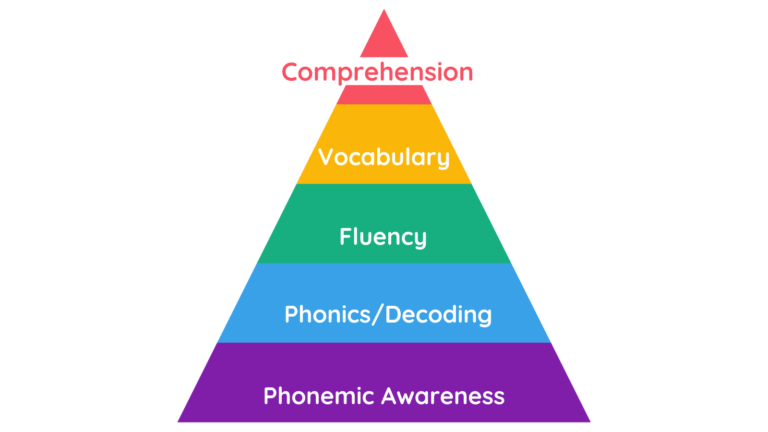
Phonics is one of the foundational pillars of the reading pyramid. Once children understand the sounds of their language and how to verbally manipulate words (phonemic awareness), they can gradually move up the pyramid. 

With continued instruction, they move up the pyramid to build fluency—the ability to read with ease, accuracy, and expression. As they grow in fluency, children build their vocabulary. Eventually, they develop all the essential reading skills and can experience reading comprehension with little adult guidance.


How Phonics Works 

Phonics instruction builds knowledge about letter-sound correlations in reading and writing. It is simply, “the relationship between speech and print” (Beck, 2006, p.16).  It is an umbrella term for several important skills children acquire through development and instruction.

Learning the Sounds of Language 

Phonemic awareness, or the ability to hear, recognize, and manipulate the different sounds in language, develops in a child’s early years of life. It sets the foundation for spoken language. 

The more that children develop and engage in literacy activities with family members, they develop pre-reading skills. They learn things like concepts of print, rhyming, several alphabetical letters, and more. Soon, they’ll be ready for phonics instruction to begin. 

The Alphabetic Principle

Before kindergarten, children typically start learning the alphabetic principle. This is the understanding that words are made of letters. It’s the concept and practice of connecting letters with their corresponding sounds (otherwise known as a “grapheme-phoneme correspondence” or GPC). Children often learn the alphabet song and know that the letters make certain sounds, like the letter <m> representing the sound /m/. With early phonics instruction, they gradually learn, for example, that the letters <ch> make the /ch/ sound as in ‘chocolate’ and /th/ is the beginning sound of the word, “thanks.”

Blending Letter Sounds to Form Words (Decoding)

The more grapheme-phoneme correspondences a child knows, the more they can practice blending. Phoneme blending is combining individual letter sounds in a word to read the whole word. This can also be called sounding out or decoding. During instruction, a child might come across a new word. The child can blend the sounds such as  /m/ /a/ /t/ to read the whole word, ‘mat’. 

Segmenting Words into Letters (Spelling/Encoding)

Inversely, children learn segmenting in phonics instruction, which is the opposite of blending. Kids learn early spelling techniques when they can spell their names, loved ones’ names, and simple words based on the individual sounds that make up a word. For example, if a child wants to spell ‘skip’ but doesn’t know how, they can gradually segment the word into its individual phonemes from start to finish: /s/ /k/ /i/ /p/.

Types of Phonics Instruction and Their Efficacy 

There are four different types of phonics. Any phonics instruction for early readers is better than no phonics instruction at all. However, some methods do have more efficacious results than others. 

Regardless of the approach in the type of phonics, instruction should be explicit and systematic. This means determining a pre-established sequence or “scope and sequence” to directly teach phonics concepts. In this way, children can start learning with easier concepts and slowly increase complexity in different stages. 

Synthetic Phonics

Synthetic phonics teaches the association of individual language sounds (phonemes) to alphabetical letters (graphemes). Then, learners are explicitly taught to “sound out” each letter and then blend the sounds to form the whole word. For example: the letter sounds /s/ /a/ /t/ are blended to decode the word ‘sat’. 

There is research-based evidence that synthetic phonics is the most efficacious type of phonics to use when teaching children to learn to read. Moore (2021) says, “It is sensible to employ an approach that makes the systematic instruction and revision of sound-spelling correspondences most comprehensible for both teachers and students. Synthetic phonics offers the simplest way to achieve this” (p. 24). 

Analogy Phonics

Analogy phonics is a top-down approach. This means the instruction starts with whole words instead of individual sounds. In analogy phonics, common “word families” or “rimes” are used to

learn words instead of blending individual letter sounds. It starts with a word a child already knows (sat), breaks them down into the onset and rime (s-at, c-at), and then introduces similar words in that pattern (mat, fat, rat, pat, etc.).

Analytic Phonics

Also known as implicit phonics, analytic phonics teaches kids to process a new word by “analyzing” its parts (phonograms) and relating them to previously learned words. For example, a child may know the words cat, sad, ran, and mat. When presented with the new word, rat, they must sift through what they know— c/at/ + m/at/ + /r/an— to conclude /r/ + –at is ‘rat’. 

An analytic phonics approach may not be effective for all children. Typically children perform better on reading and spelling with a synthetic phonics approach. 

Embedded Phonics

The embedded, or incidental, phonics method provides reading instruction using whole texts. It is based on a theory of reading instruction called “whole language.” Instead of teaching explicit, systematic phonics skills, it requires opportunistic learning through practices like sight words (the, it, and, was, etc.) and context clues (words, letters, or pictures that hint at meanings or other words in the sentence). 

Embedded phonics practices are often considered “real world” reading but can hinder a child’s decoding skills, which are essential for reading new words. Relying on context clues is considered a bad habit as it can stunt overall literacy development.

Phonics, Explained Simple Enough for a Child to Understand 

Reading is like a fun treasure hunt. You can explore all sorts of stories and ideas to find the golden nuggets you’re looking for, and sometimes, discover amazing prizes you never imagined. This treasure hunt happens in the world of words, where endless adventures of learning and imagination live. 

But when children first enter the world of words, they don’t know where to go. Everything looks squiggly and confusing because this world is made of secret codes. These secret codes are letters of the alphabet. 

The first adventure is to learn to crack the code, which is what phonics teaches. Every letter makes a special sound; many of them you already know how to speak. Every time you learn a new letter and the sounds it makes, you crack another piece of the code. 

As you learn more of these letters and their sounds, you’ll be able to decode words. Soon, the world of words will come to life and you’ll collect many treasures as you explore. With practice, you can enjoy new and exciting treasure hunts for life.

Resources to Help a Child Learn Phonics

There are countless phonics programs available today. But like the different phonics instruction methods, not all programs are the same or offer the best results.

To help you decide which phonics programs might help your child learn, phonics.org offers: 

  • Educational articles and guides: Gain a deeper understanding of phonics principles, teaching strategies, and best practices.
  • Phonics program reviews: Compare expert-reviewed assessments of popular phonics curricula to help you make an informed decision.
  • Fun phonics activities and games: Browse the top resources that make learning phonics fun and interactive.

Whether you’re teaching your child at home or a group of students in a classroom, there are affordable, effective phonics programs to help their learning process. Explore the resources at phonics.org to find the right one!

Have a phonics program or app you’d like us to review? Reach out to us at [email protected] to let us know.