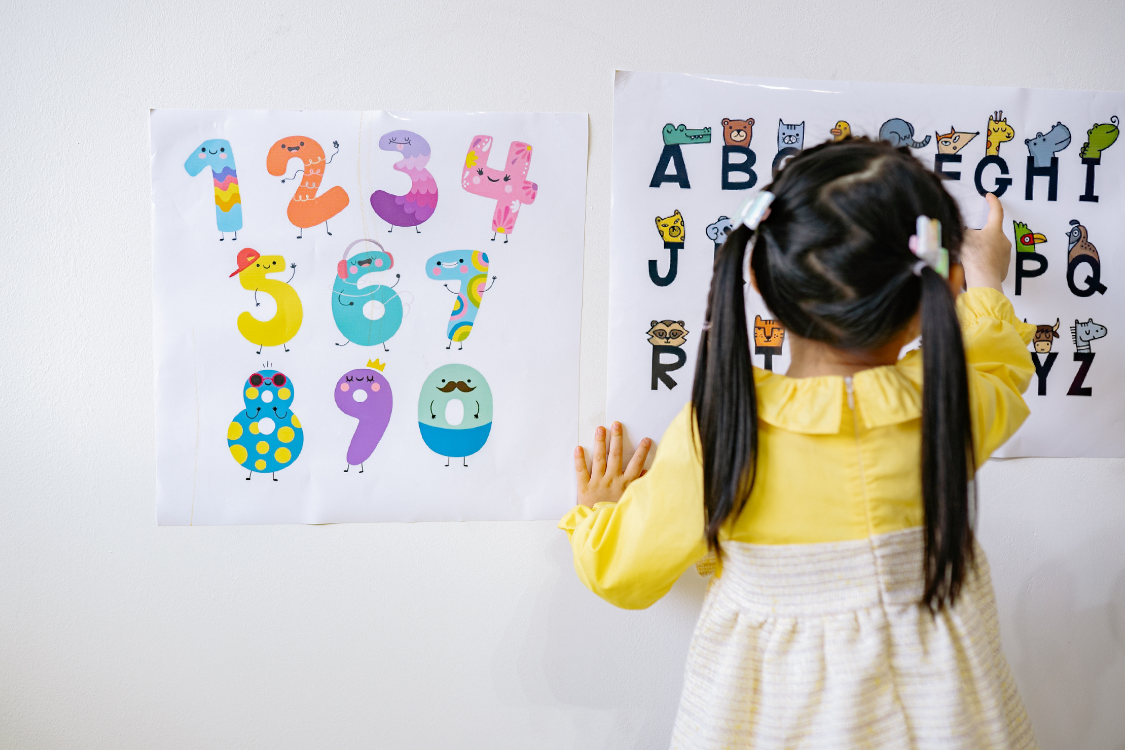
Preschool Phonics: What’s Developmentally Appropriate?

Here’s something that surprises many parents: phonics learning doesn’t begin in kindergarten. It begins in the bathtub. It begins in the car. It begins every time your toddler claps along to a nursery rhyme or points at the golden arches and shouts, “M for McDonald’s!” Long before children sit down with a workbook, their brains are quietly doing the foundational work that reading is built on.

So what should you actually expect from a preschool child when it comes to phonics, and how do you know if your child is on track?

The Brain Is Getting Ready Long Before Formal Instruction Begins

Reading is not a natural skill the way speaking is. The human brain has to be explicitly taught to connect printed letters with speech sounds, and that process takes time, repetition, and the right kind of support. But the groundwork for that process begins very early.

In the preschool years, children are building what researchers call phonological awareness, the ability to hear, recognize, and play with the sounds in spoken language. This is not the same as phonics, but it’s the essential precursor to it. A child who can hear that “cat” and “hat” rhyme, or who can clap out the syllables in their name, is developing exactly the skills their brain needs before formal letter-sound instruction begins.

What’s important to understand is that this isn’t “pre-learning.” It’s real, meaningful literacy development, and it matters enormously for what comes next.

What’s Developmentally Appropriate in Preschool

Parents often feel pressure to push reading early, especially when they see other children seemingly ahead. But the Science of Reading is clear: forcing formal phonics instruction before a child is developmentally ready doesn’t accelerate learning. It can actually create frustration and avoidance.

Here’s a realistic picture of what most children can do at each preschool stage:

Around age 3: Children may begin to recognize that words are made of sounds. They can enjoy rhymes, songs, and repetitive language. They may recognize the first letter of their name and understand that books are “read,” not just looked at.

Around age 4: Many children can identify some letters, especially those in their name or frequently seen in their environment. They may begin to notice beginning sounds in words (“ball starts with /b/!”) and love playing with language, making up silly rhymes, and repeating funny-sounding words.

Around age 5 (preschool/Kindergarten transition): Children can be ready to begin connecting letters to their sounds more systematically. They may be able to blend two or three simple sounds together, recognize more letters of the alphabet, and understand that print moves from left to right.

None of this requires drilling flashcards. It happens through rich, language-filled experiences, such as being read to daily, singing songs, playing word games, and having adults who talk with them, not just to them.

Signs Your Preschool Child Is Building a Strong Foundation

You don’t need to administer a test to gauge how your child is progressing. Pay attention to these natural signs of healthy pre-literacy development. A child on track will typically show curiosity about books and print, enjoy rhyming games and songs, begin recognizing letters, especially in familiar words like their name, notice beginning sounds in words, and understand that the squiggles on a page mean something.

If your child consistently avoids books, seems uninterested in language play, or has difficulty hearing rhymes well past age four, that’s worth a gentle conversation with their preschool teacher or pediatrician. Early support is far easier than later intervention, and the window for building these foundational skills is real.

What to Watch Out for in Preschool Phonics Programs

Not all preschool phonics instruction is created equal. Some preschool programs do an excellent job of weaving phonological awareness into daily routines through songs, stories, and play. Others may push formal, worksheet-based phonics instruction too early, which can feel like learning but often misses the mark developmentally.

At Phonics.org, the approach we advocate for is explicit and systematic, but that doesn’t mean rigid or joyless, especially for the youngest learners. In preschool, appropriate phonics-aligned instruction looks like singing the alphabet, emphasizing letter sounds (not just letter names), reading aloud books that play with rhyme and repetition, pointing out letters in the environment, and playing simple sound-matching games.

What it does not look like is pressuring a four-year-old to decode CVC words or memorizing sight words before they’ve developed solid phonemic awareness. Sequence matters. The Science of Reading is not about going faster. It’s about going in the right order.

How Parents Can Support Phonics Readiness at Home

You are your child’s first and most important literacy teacher, and the good news is that supporting preschool phonics doesn’t require a curriculum. Daily read-alouds are one of the single most powerful things you can do. When you read with expression, pause to talk about what’s happening, and occasionally point to words on the page, you’re building comprehension, vocabulary, and print awareness all at once.

Beyond reading, talk constantly. Describe what you’re doing while you cook, narrate a trip to the grocery store, ask your child questions that require more than a yes or no answer. Rich oral language is the soil that phonics instruction grows in, and children who arrive at kindergarten with strong vocabularies and solid phonemic awareness almost always have an easier time learning to decode.

Letter play is valuable, too. Magnetic letters on the fridge, alphabet puzzles, and writing their name together are all developmentally appropriate ways to begin building letter knowledge without pressure. The goal in preschool isn’t mastery. It’s exposure, curiosity, and a growing love of language.

Preschool Phonics: Build the Right Foundation at the Right Time

Preschool is not too early to think about phonics, but it is too early for formal, pressured instruction. The most important thing parents and educators can do in these years is build a rich language environment, cultivate a love of books, and develop phonological awareness through play and conversation.

When children arrive at kindergarten with those building blocks in place, explicit phonics instruction has fertile ground to take root. That’s the path the Science of Reading points to, and it’s the path that leads to confident, capable readers.

For more parent-friendly guidance on supporting your early reader from preschool through the elementary years, visit Phonics.org regularly. We share honest, research-backed resources to help every child get the literacy foundation they deserve.

Kindergarten Phonics Pacing: Month-by-Month Expectations

If you’ve ever sat at a kindergarten pickup wondering whether your child is keeping pace with their classmates, you’re not alone. Phonics progress in kindergarten can feel mysterious from the outside. One child seems to be reading already, while another is still working on letter sounds, and both can be perfectly on track.

What the Science of Reading tells us is that children arrive at kindergarten with widely varying levels of literacy exposure, and that’s completely normal. What matters most is that once formal instruction begins, it’s explicit, systematic, and consistent. This guide is meant to give you a general sense of how phonics skills tend to unfold across the kindergarten year, not as a rigid checklist, but as a warm and honest picture of what learning often looks like.

The Fall Months: Build the Foundation

For many children, the first weeks of kindergarten are about orientation, learning routines, meeting classmates, and settling into a school environment. Phonics instruction typically begins gently, and what teachers introduce during this time is foundational rather than advanced.

In the early fall, most kindergarten classrooms focus on phonological awareness, helping children tune into the sounds of spoken language before connecting those sounds to letters. This might look like clapping syllables in names, identifying rhyming words, or listening for the beginning sound in a word. These skills may seem simple, but they are genuinely essential. 

Letter recognition and letter-sound correspondence also typically begin in the fall. Most programs introduce letters in a deliberate sequence, often starting with high-frequency consonants and short vowel sounds, rather than simply working through the alphabet from A to Z. If your child’s teacher seems to be moving slowly or skipping around the alphabet, that’s likely intentional and aligned with a structured phonics scope and sequence.

By the end of fall, many children are beginning to recognize a growing number of letters and their sounds, though the pace varies considerably from child to child. Some will be connecting sounds and beginning to blend two-letter combinations; others will still be solidifying letter recognition, which is also completely appropriate.

The Winter Months: Connect Sounds to Reading

As winter settles in, kindergarten phonics instruction typically picks up. Children who have been building letter-sound knowledge start to practice blending, combining individual sounds to read short words. This is a pivotal moment in literacy development, and it can happen at very different times for different children.

The most common entry point for blending is the CVC word, consonant-vowel-consonant patterns like “sat,” “pin,” and “hop.” These short, decodable words give children a chance to practice what they’ve been learning in a meaningful way. For many kids, the lightbulb moment of actually reading a word, no matter how small, is enormously motivating.

Winter is also often when sight word instruction expands. Sight words are high-frequency words that appear constantly in early texts, and while many of them are decodable with phonics knowledge, some have irregular spellings that children simply need to recognize on sight. A good phonics program will introduce these gradually and in context, rather than as isolated memorization lists.

It’s worth noting that blending can be genuinely hard for some children even when they know their letter sounds well. The act of holding individual sounds in memory and pushing them together is a cognitive skill that develops with practice. If your child knows their sounds but struggles to blend, that’s useful information, and it means targeted practice with blending activities, not a sign that something is deeply wrong.

The Spring Months: Growth, Fluency, and Early Reading

Spring kindergarten is where many families start to notice real progress. Children who have been steadily building phonics skills through the fall and winter often begin reading simple decodable books, short texts where nearly every word can be sounded out using the phonics patterns they’ve learned. This is a genuinely exciting milestone, and it builds reading confidence in a way that memorizing whole words can’t.

By spring, many kindergartners are working with a broader range of phonics patterns. Instruction may expand beyond simple CVC words to include consonant blends like “bl,” “st,” and “cr,” as well as digraphs like “sh,” “ch,” and “th.” Some children will move into these patterns smoothly; others will need more time with the basics, and that is completely valid.

This is also the time of year when differences between classmates can feel most visible to parents. One child may be reading simple sentences while another is still sounding out three-letter words. Both can be within a normal range of kindergarten development. The critical thing is whether a child is making progress, even if that progress looks different from their neighbor’s.

If you notice your child has stalled or is showing significant frustration with reading activities, spring is a good time to talk with their teacher. Many schools have assessment checkpoints throughout the year, and kindergarten teachers typically watch closely for children who may benefit from additional support before first grade begins.

What to Do at Home All Year Long

Throughout kindergarten, there are simple, meaningful things parents can do at home that make a genuine difference. Daily reading aloud remains one of the most impactful habits you can maintain, not because it directly teaches phonics, but because it builds vocabulary, comprehension, and a love of books that supports everything else.

Playing simple word games in the car or at dinner reinforces phonemic awareness without feeling like homework. Ask your child to think of words that start with the same sound as “dog,” or challenge them to count the syllables in a funny word. Keep it lighthearted. Phonics learning sticks best when it feels like play rather than pressure.

When your child brings home decodable readers or sight word lists from school, try to practice in short, cheerful sessions rather than long drills. Five minutes of engaged practice is worth far more than twenty minutes of reluctant repetition. Celebrate small wins genuinely, not with over-the-top praise, but with authentic enthusiasm that tells your child you noticed their effort.

And perhaps most importantly, try to resist comparing your child’s timeline to another child’s. Kindergarten phonics pacing varies for real, legitimate reasons; differences in preschool exposure, language background, developmental readiness, and learning style all play a role. The goal isn’t to finish reading chapter books in kindergarten. The goal is to finish kindergarten with a solid foundation of letter-sound knowledge, some blending ability, and a positive relationship with reading.

Wrap Up the Kindergarten Year With Confidence

By the time spring conferences roll around and kindergarten winds down, most children have covered a meaningful amount of phonics ground, even when that ground looks different from child to child. A year of explicit, systematic instruction builds more than just reading skills. It builds the belief that reading is something your child can do.

If your child’s kindergarten year felt rocky at times, take heart. The research is clear that early, consistent phonics instruction, paired with patient support at home, makes an enormous difference over time. And if you’re curious about what first-grade phonics typically looks like, or want to explore apps and programs that can support your early reader at home, Phonics.org has you covered.

Visit Phonics.org for honest, parent-friendly resources on every stage of your child’s reading development. We’re here to help every child, at every pace, become a confident reader.

Administrative Support for Phonics Programs: What Leaders Need to Know

School administrators face an enormous challenge. Reading scores have declined, the achievement gap persists, and teachers are stretched thin as they try to meet diverse student needs. At the same time, there’s growing pressure to implement research-based reading instruction, particularly systematic phonics programs.

But here’s what many people don’t realize: adopting a phonics program isn’t enough. Implementation requires informed leadership, ongoing support, and a clear understanding of what makes phonics instruction effective. Administrators who grasp these essentials can improve reading outcomes across their entire school.

Understanding the Foundation

Before leading phonics implementation, administrators need a solid grasp of reading science. This doesn’t mean principals need to become reading specialists, but they do need to understand the basics of how children learn to read.

Reading comprehension depends on two main components: word recognition and language comprehension. Children need both to become skilled readers. Phonics instruction addresses the word recognition side, teaching children to decode written words by connecting letters to sounds. Meanwhile, vocabulary development, background knowledge, and comprehension strategies build language understanding.

When administrators understand this framework, they can better evaluate programs, support instructional planning, and have meaningful conversations with teachers about student progress.

Move Beyond Adoption to Implementation

Many schools purchase excellent phonics programs only to see them sit on shelves or get used inconsistently across classrooms. The difference between adoption and effective implementation is substantial.

Implementation with integrity means using the full curriculum while allowing teachers to make thoughtful adjustments that preserve core content and meet student needs. This isn’t about rigid scripts that remove teacher judgment. Rather, it’s about ensuring that every child receives explicit, systematic phonics instruction while teachers use their professional expertise to differentiate and support individual learners.

Administrators who protect instructional time for phonics and provide teachers with the resources they need signal that this work matters. When phonics instruction gets interrupted or deprioritized, students pay the price.

Support Teachers Through the Transition

Shifting to systematic phonics instruction represents a significant change for many teachers, especially those who were trained in other approaches. Administrators can ease this transition in several practical ways.

First, emphasize the research. Teachers want their students to succeed. When they understand that explicit phonics instruction is proven effective, they’re more likely to embrace it. Point them toward studies showing real gains, not just theory. Share success stories from other schools. Help them see a clear path to helping their students read.

Second, provide meaningful professional development. One-day workshops aren’t enough. Teachers need ongoing learning opportunities, time to practice new strategies, and chances to observe skilled colleagues. Consider bringing in literacy coaches who can work directly with teachers in their classrooms.

Third, give teachers time to prepare. Effective phonics instruction requires planning, particularly when teachers are differentiating for students at multiple reading levels. Building in collaborative planning time and protecting it from other demands shows teachers that you value their instructional preparation.

Create Systems That Work

Effective phonics instruction doesn’t happen in isolation. It requires a coordinated system of support that includes high-quality core instruction, targeted interventions for struggling readers, and enrichment for students who are advancing quickly.

Strong core instruction should meet the needs of most students. When core phonics instruction is effective, fewer students need intensive interventions. But this requires protecting instructional time, providing appropriate materials, and ensuring teachers can differentiate within their classrooms.

For students who need additional support, administrators must ensure that interventions are evidence-based, delivered by trained staff, and monitored through data. These interventions should supplement, not replace, core instruction. Every child deserves access to grade-level content, even while receiving targeted support in foundational skills.

Use Data Thoughtfully

Assessment data should guide instruction, not just fulfill compliance requirements. Screening assessments identify students at risk. Diagnostic assessments pinpoint specific areas of need. Progress monitoring checks whether interventions are working.

But here’s what matters most: the goal should be proficiency, not just growth. A student who moves from well below grade level to slightly below grade level has grown, and that growth deserves recognition. However, proficiency means that the child can actually read grade-level texts independently. That’s the standard we’re aiming for.

Administrators who help teachers use data to inform instruction, rather than letting data become another burden, create a culture where assessment serves learning.

Address the Reality of Mixed-Level Classrooms

One of the biggest challenges teachers face is the wide range of reading levels in a single classroom. A fifth-grade teacher might have students reading at first-, third-, and seventh-grade levels in the same room.

This reality requires administrators to think creatively about staffing, scheduling, and resources. Can reading specialists push into classrooms during core instruction time? Can intervention blocks be scheduled strategically so students get both grade-level content and targeted support? Are teachers equipped with materials that span multiple levels?

Teachers have never seen achievement gaps this wide. Supporting them means acknowledging this challenge and working together to find solutions rather than expecting teachers to handle it alone.

Build a Culture of Continuous Improvement

Effective literacy leadership isn’t about implementing a program and declaring victory. It’s about creating systems that support teachers’ continuous learning, reflection on their practice, and adjustment to student needs.

Professional learning communities (PLCs) offer one structure for this work. When PLCs function well, teachers analyze data together, plan instruction collaboratively, study effective practices, and share strategies that work. Administrators who facilitate meaningful PLCs, rather than letting them become administrative meetings, help teachers improve their craft.

Feedback matters too. Teachers benefit from specific, actionable feedback focused on instructional practice and student outcomes. This isn’t about catching teachers doing something wrong. It’s about coaching them toward increasingly effective instruction.

Maintain Perspective and Patience

Reading improvement takes time. Schools that moved away from phonics instruction didn’t arrive there overnight, and they won’t transform reading outcomes in a single year. Realistic timelines, three to five years, help everyone maintain focus without becoming discouraged by slow progress.

Celebrate small wins. A one percent increase on state tests represents real improvement for real children. Building on incremental progress maintains momentum and reminds everyone that their efforts matter.

Meanwhile, remember that there’s no single perfect program. Different students need different levels of support. The goal is to equip teachers with multiple evidence-based strategies to meet each child’s needs.

Admin’s Role in Phonics Success

Administrative support makes or breaks phonics implementation. Leaders who understand reading science, provide ongoing teacher development, protect instructional time, use data thoughtfully, and maintain realistic expectations create conditions where systematic phonics instruction can flourish.

This work isn’t easy, but it’s essential. Every child deserves to learn to read, and administrators play a key role in making that happen.

For more resources on evidence-based reading instruction and practical implementation strategies, visit Phonics.org regularly. We’re here to support educators at every level.

Parent Pushback: Addressing Concerns About Phonics Instruction

You’ve just announced that your school is implementing a new systematic phonics program. You expect relief. After all, reading scores have been declining, and this approach is backed by decades of research. Instead, you get pushback from parents.

“Isn’t phonics just drill and kill?”

“My child loves reading. Won’t this make them hate it?”

“I learned to read without phonics. Why do we need it now?”

These concerns are genuine, and they deserve thoughtful responses. Parents who question phonics instruction aren’t being difficult. They’re trying to protect their children’s education and love of learning. Understanding their worries and addressing them honestly builds the trust schools need to help every child become a successful reader.

The “Drill and Kill” Concern

Perhaps the most common worry parents express is that phonics instruction will be boring and mechanical. They imagine endless worksheets, robotic reading, and children who can decode words but hate books.

This concern isn’t baseless. Some phonics instruction in the past did rely heavily on repetitive drills that squeezed the joy out of reading. But modern, research-based phonics programs look very different.

Today’s effective phonics instruction is engaging and multisensory. Children might use magnetic letters to build words, play games that reinforce sound patterns, or read decodable books to practice new skills in context. The instruction is systematic and explicit, yes, but it’s also designed to be interactive and engaging.

More importantly, phonics is just one component of a comprehensive reading program. Children learning phonics also listen to rich literature read aloud, discuss stories, build vocabulary, and develop comprehension skills. The goal is children who can both decode words and understand what they’re reading, and who love books.

Worries About Crushing Creativity and Love of Reading

Some parents fear that focusing on phonics will turn reading into a technical exercise rather than a joyful experience. They remember falling in love with stories as children and want the same for their kids.

Here’s what these parents need to know: phonics doesn’t replace literature. It provides the tools children need to access literature independently.

Think of it like learning to play piano. Students practice scales and finger exercises, the technical skills, but they also play actual songs they enjoy. No one would suggest that a child should play only scales. But without those foundational skills, they’ll struggle to play the music they love.

The same applies to reading. Systematic phonics gives children the decoding skills they need, so they can eventually read whatever interests them: fantasy novels, science books, poetry, and graphic novels. The technical instruction enables the joyful reading that comes later.

Many teachers continue reading aloud to their students while teaching phonics. They discuss characters, make predictions, and explore ideas in books that are above students’ independent reading level. This builds comprehension skills and maintains enthusiasm for reading while phonics instruction develops decoding ability.

“I Learned to Read Without Phonics”

Many parents learned to read through whole-language approaches that minimized phonics instruction. They remember memorizing sight words and using picture clues. It worked for them, so why change?

This is a fair question that deserves an honest answer. Some children do learn to read without explicit phonics instruction. These students often have strong phonological awareness naturally, come from homes with lots of books and language exposure, and can figure out the letter-sound system on their own through extensive reading.

But not all children are so fortunate. Research consistently shows that children benefit significantly from explicit phonics instruction. 

The children who struggle most without phonics instruction are often those who can least afford to fall behind: children from low-income families with less home literacy support, children with dyslexia or other learning differences, and English language learners. For these students, waiting and hoping they’ll figure it out can mean years of reading failure.

The shift to systematic phonics isn’t about rejecting what worked for some children. It’s about ensuring all children get what they need to succeed.

Concerns About “Teaching to the Test”

Some parents worry that phonics programs focus too heavily on assessments and data, reducing reading to test scores rather than genuine understanding.

Assessment does play an important role in phonics instruction, but not in the way parents might fear. Screening assessments help teachers identify which students need extra support before they fall significantly behind. Diagnostic assessments pinpoint specific skills students need to learn. Progress monitoring checks whether the instruction is working.

These assessments aren’t about labeling children or preparing for standardized tests. They’re about making sure every child gets the instruction they need. Without assessment, teachers are guessing about what students know and what they still need to learn.

The goal isn’t raising test scores for their own sake. It’s ensuring children can actually read, decode words accurately, read fluently, and comprehend what they’re reading. When children develop these skills, test scores naturally improve as a side effect.

Questioning Whether “One Size Fits All”

Parents sometimes resist systematic phonics programs because they believe every child learns differently and needs a personalized approach. They worry that a structured program won’t meet their individual child’s needs.

This concern reflects a partial truth. Children do differ in how quickly they learn phonics skills and how much practice they need. But research shows that the underlying process of learning to read, connecting letters to sounds and blending those sounds to read words, is the same for all children.

Effective phonics programs aren’t rigid scripts that ignore individual differences. They provide a systematic instructional sequence while allowing teachers to differentiate. Some children might move through the sequence quickly with minimal practice. Others might need more repetition and support. Teachers can group students flexibly and provide targeted help where needed.

The systematic part means teachers don’t skip essential skills or teach them in random order. The differentiation part means they adjust the pace and support level for each student.

Fear of Leaving Advanced Readers Behind

Parents of children who are already reading sometimes worry that systematic phonics instruction will bore their advanced readers or hold them back.

Strong phonics programs include enrichment opportunities for students who’ve already mastered foundational skills. While some children work on blending three-letter words, others might explore complex spelling patterns, read challenging texts, or develop their writing skills.

Additionally, even students who can already read often benefit from explicit phonics instruction. Many young readers have developed some decoding skills but haven’t mastered all the patterns they’ll encounter in more complex texts. Systematic instruction fills gaps and builds a complete understanding of how English spelling works.

Build Trust Through Transparency

The most effective way to address parent concerns is through open communication. Schools that explain why they’re implementing phonics instruction, what it looks like in practice, and how it helps children tend to have fewer worried parents.

Invite parents into classrooms to observe phonics lessons. Share examples of the engaging activities children do. Explain how phonics instruction fits within a broader literacy program. Show them the research in an accessible language.

Most importantly, listen to their concerns without dismissing them. Parents who feel heard are more likely to trust educators even when they don’t fully understand the technical details of reading instruction.

Move Forward Together

Parent pushback isn’t an obstacle to overcome. It’s an opportunity to build a partnership. When parents understand that phonics instruction is engaging, evidence-based, and designed to help all children become successful readers, most become supportive.

The conversation doesn’t end with initial buy-in. Keep parents informed about their child’s progress. Share strategies they can use at home to support reading development. Celebrate growth together.

Every parent wants their child to become a confident, capable reader who loves books. When schools and families work together with that shared goal, children benefit.

For more information about evidence-based reading instruction and resources for talking with parents about phonics, visit Phonics.org regularly. Together, we can ensure every child learns to read.

When Phonics Rules Don’t Work: Teaching Exception Words Systematically

You’ve been working hard with your child on phonics. They’re blending sounds beautifully, sounding out “cat” and “ship” with confidence. Then they encounter the word “said” and try to pronounce it “s-ay-d.” Your heart sinks a little. Welcome to the world of exception words.

What Makes Exception Words So Tricky?

Exception words, sometimes called common exception words or sight words, are words that don’t follow the standard phonics patterns children learn in their early reading instruction. These are words like “the,” “was,” “said,” “come,” and “one.” They show up constantly in books, yet they refuse to play by the rules.

Here’s what makes them challenging: Your child has learned that when they see the letter ‘o’ followed by ‘n’ and ‘e,’ they should say the long ‘o’ sound, like in “bone” or “cone.” But then “one” comes along and completely breaks that pattern. It’s confusing, and it can shake a young reader’s confidence in the phonics system they’ve been learning.

The good news? Research shows that even these rule-breakers can be taught systematically. You don’t have to just drill flashcards and hope for the best.

Why These Words Matter So Much

Exception words aren’t just random vocabulary. They’re some of the most frequently used words in the English language. Think about how often you use “the,” “said,” “was,” or “are” in a single paragraph. These words make up a huge portion of the text young readers encounter.

When children stumble over these words repeatedly, it disrupts their reading flow. They can’t focus on understanding the story when they’re stuck trying to decode “what” for the tenth time. Mastering exception words helps children read more smoothly and with better comprehension.

Teaching Exception Words: A Systematic Approach

The key to teaching exception words isn’t abandoning phonics. It’s using what children already know and being explicit about what’s different.

Start with what’s regular. Even in exception words, some parts usually follow phonics patterns. In the word “said,” the ‘s’ and ‘d’ sounds are perfectly regular. Only that tricky middle part breaks the rules. Point this out to children. “We know the ‘s’ says /s/ and the ‘d’ says /d/, but in this word, ‘ai’ makes the short ‘e’ sound instead of the long ‘a’ sound we usually see.”

Mark what’s unusual. Some teachers and parents find it helpful to highlight or underline the irregular part of exception words. This visual cue helps children remember which part they need to memorize. In “said,” you might underline “ai” to remind them this is the part that’s different.

Use multiple senses. Write the word. Say the word. Trace the letters while saying the word. The more ways children interact with exception words, the better they’ll remember them. This multisensory approach creates stronger memory pathways in the brain.

Practice in context immediately. Don’t just drill isolated words. After introducing an exception word, have your child read it in sentences right away. “I said hello. She said goodbye. We said thank you.” This helps children recognize the word automatically when they encounter it in real reading.

Build Memory Through Repetition

Exception words need more repetition than regular phonics patterns because children can’t rely on decoding rules to remember them. But repetition doesn’t have to mean boring drills.

Mix these words into regular reading practice. Point them out in favorite books. Create simple sentences together using the new words. Play quick games where children find exception words in a paragraph. The goal is frequent, brief encounters rather than long memorization sessions.

Common Words for Different Ages

In early first grade, children typically learn basic exception words like “the,” “to,” “do,” “I,” and “no.” As they progress, they tackle trickier words like “could,” “would,” “should,” “who,” and “many.”

By second grade, children work with words like “because,” “people,” “water,” and “different.” The patterns become more complex, but the teaching approach stays the same: identify what’s regular, highlight what’s not, and provide plenty of practice in context.

What About Reading Programs?

Many systematic phonics programs include instruction on exception words as part of their sequence. They introduce these words gradually, often teaching them alongside related phonics patterns. For example, children might learn “said” when they’re working on words with ‘ai’ in them, so they can directly compare the regular pattern with the exception.

If your child’s program doesn’t systematically teach exception words, you can supplement at home using the strategies above. Just don’t overwhelm them, introduce a few at a time and make sure they’re mastering each small set before moving on.

Exception Words and Long-Term Reading Success

Exception words may not follow the rules, but teaching them doesn’t have to be random or frustrating. With systematic instruction that builds on phonics knowledge, explicit teaching about what makes each word different, and plenty of practice in context, children can master these essential words.

Remember, every proficient reader you know has learned to read exception words. Your child will too. It just takes patience, good instruction, and consistent practice.

For more evidence-based strategies and honest reviews of reading programs, visit Phonics.org regularly. We’re here to help every child become a confident reader.

Why Most Teachers Weren’t Taught to Teach Phonics

If you’re a parent whose child is struggling to read, you might wonder why their teacher seems uncertain about phonics instruction. It’s a fair question, and the answer might surprise you: many teachers were never taught how to teach phonics in their college education programs.

This isn’t about blaming teachers. In fact, most teachers are just as frustrated by this gap in their training as parents are. When educators learn about the research supporting systematic phonics instruction, they often ask, “Why didn’t anyone teach me this in college?”

The Legacy of Reading Wars

For decades, American education has been caught in what’s often called “the reading wars“—a long-standing debate about the best way to teach children to read. On one side stood phonics, focused on teaching children to decode words by learning letter-sound relationships. On the other side was the whole-language approach, which emphasized reading for meaning from the start and assumed that children would pick up phonics naturally through exposure to books.

Throughout much of the late 20th century, whole language dominated teacher education programs. Many teachers who graduated between the 1970s and early 2000s were taught that explicit phonics instruction was unnecessary or even harmful. They learned instead to teach children to memorize whole words, use picture clues, and guess from context, strategies now known as the “three-cueing system.”

These teachers weren’t given inadequate training because their professors were careless or uninformed. At the time, whole language was considered best practice by many literacy experts. Teacher education programs were simply teaching what the field believed to be true.

What Changed

While whole language instruction dominated classrooms, researchers in cognitive science, neuroscience, and psychology were making discoveries about how the brain actually learns to read. Study after study confirmed that explicit, systematic phonics instruction helps children learn to read more effectively than other approaches.

In 2000, the National Reading Panel examined decades of research and confirmed that phonics instruction is essential for teaching children to read. They identified five key components of effective reading instruction: phonemic awareness, phonics, fluency, vocabulary, and comprehension.

But here’s a challenge: research findings published in academic journals don’t automatically change what happens in college classrooms or elementary schools. Even as evidence mounted in favor of phonics instruction, many teacher education programs continued teaching the methods they’d always taught.

The Reality of Teacher Preparation

Consider what teacher preparation programs must cover. Elementary education majors need to learn how to teach reading, writing, math, science, social studies, and more, all within a four-year degree program. At one university, reading and literacy courses account for just 15 of the 124 hours required for graduation.

Within those limited hours, professors must cover an enormous amount of ground. Even when programs include phonics instruction, students might not receive enough depth or practice to feel confident teaching it. A student might complete their education courses, do their student teaching in a fourth-grade classroom where reading instruction looks different from that in kindergarten, and then get hired to teach first grade, where children are just learning to read.

It’s no wonder many new teachers feel unprepared.

The Challenge Intensifies

The teacher shortage has made this situation more complicated. Many states now issue large numbers of emergency teaching certificates to fill vacant positions. These individuals often have no formal teacher training upon entering the classroom. While emergency certification helps schools stay staffed, it means more children are being taught by adults who haven’t received any preparation in reading instruction.

Some states now require emergency-certified teachers to complete professional development training in reading science. That’s a positive step, but it doesn’t help the thousands of veteran teachers who completed their education before the importance of phonics was widely recognized in teacher training.

Move Forward Without Blame

Understanding why teachers weren’t taught phonics helps us respond constructively rather than with criticism. Teachers are doing their best with the training they received. Many are actively seeking better information about how to help their struggling readers.

When teachers learn about the research supporting phonics instruction, most respond with relief rather than defensiveness. They’ve often seen students struggle with the methods they were taught. Learning about systematic phonics gives them new tools that actually work.

Some states are taking steps to address these gaps. They’re updating teacher education requirements, providing professional development focused on reading science, and supporting teachers as they learn new approaches. These changes take time, but they’re happening.

What Parents Can Do

If your child’s teacher seems unsure about phonics instruction, remember this probably reflects their training rather than their dedication or care for students. Many teachers are working hard to fill in the gaps in their own education while simultaneously teaching full classrooms of children.

You can support both your child and their teacher by asking questions respectfully, sharing information about reading research when appropriate, and advocating at the district level for professional development in systematic phonics instruction.

Teachers didn’t choose to be inadequately prepared for teaching reading. They deserve support as they work to learn what they weren’t taught in college. With better training and resources, they can become the effective reading teachers every child deserves.

For more information about evidence-based reading instruction and resources for both parents and teachers, visit Phonics.org regularly. Together, we can ensure every child learns to read.

Phonics First vs. Sounds-Write: Comparing Synthetic Phonics Programs

You’ve done your research. You understand that systematic synthetic phonics is a typical standard for teaching reading. You know your child or students need explicit instruction in letter-sound relationships with a clear scope and sequence. But now you face a new challenge: choosing between programs that all claim to offer systematic synthetic phonics instruction.

Parents scrolling through forums see passionate advocates for different approaches. Teachers attending professional development hear compelling presentations about various programs. Administrators review proposals from multiple curriculum vendors, each promising research-based results. How do you decide when everyone claims the science is on their side?

The truth is that several well-designed synthetic phonics programs exist, each with slightly different philosophies and approaches while sharing fundamental principles. Understanding what makes synthetic phonics effective and how quality programs differ in their implementation helps you make informed choices rather than relying on marketing claims or social media hype.

What Defines Quality Synthetic Phonics

Before comparing specific programs, let’s establish the non-negotiables that any quality synthetic phonics approach must include. 

  1. First, the program must explicitly and systematically teach letter-sound correspondences. Students learn that specific letters and letter combinations represent specific sounds, and they’re taught these relationships directly rather than discovering them through exposure to books.
  2. Second, effective programs teach blending and segmenting as core skills from the beginning. Students learn to push individual sounds together smoothly to read words and to pull words apart into individual sounds for spelling. This focus on manipulation of phonemes (the smallest units of sound) distinguishes synthetic phonics from approaches that emphasize memorizing whole words or recognizing word families.
  3. Third, quality programs follow a carefully designed scope and sequence, introducing sounds in an order based on usefulness and learnability rather than alphabetically or randomly. Common, regular letter-sound relationships come before rare or complex patterns. Single-letter sounds precede multi-letter combinations, and short vowel sounds typically precede long vowel patterns.
  4. Fourth, effective synthetic phonics includes regular review and cumulative practice. Each new concept builds on previous learning, and students continually practice earlier skills while adding new ones. This distributed practice helps move knowledge from short-term to long-term memory.
  5. Finally, quality programs provide decodable texts that match the phonics patterns students have learned. Children should be able to successfully read practice materials using only the letter-sound relationships they’ve been taught, building confidence and proving that their phonics knowledge actually works for real reading.

Core Principles Shared Across Strong Programs

The most effective phonics programs, regardless of specific approach, share several key principles that distinguish them from less rigorous alternatives. They all reject the three-cueing system, the problematic strategy of using picture clues, context, and first-letter guessing to identify words. Instead, they teach students to rely primarily on decoding by processing all the sounds in words from left to right.

Quality programs also maintain high expectations for all learners. They don’t sort children into “readers” and “non-readers” based on perceived ability. Instead, they recognize that virtually all children can learn to read when given systematic, explicit instruction with adequate practice and support. Adaptations for struggling learners focus on pacing and the amount of practice rather than watering down content.

Strong programs integrate spelling (encoding) with reading (decoding) instruction. Students learn that the same letter-sound relationships work in both directions, for reading words on the page and for writing words from their minds onto paper. This reciprocal teaching reinforces understanding and builds more robust phonics knowledge.

Examining Different Instructional Approaches

While maintaining these core principles, quality synthetic phonics programs differ in their specific instructional methods and sequences. Some key areas of variation include:

Sequencing Decisions

  • Which letters and sounds are introduced first and why
  • Whether consonants and vowels are introduced together or separately
  • The pace of introducing new grapheme-phoneme correspondences
  • When to introduce consonant blends, digraphs, and complex vowel patterns

Teaching Techniques

  • How blending is modeled and practiced with students
  • What multisensory elements are incorporated into lessons
  • The balance between oral phonics activities and written work
  • How much time is spent on phonemic awareness before introducing letters

Assessment Approaches

  • Frequency and format of progress monitoring
  • How mastery is defined before moving to new content
  • Whether assessments focus on speed, accuracy, or both
  • What intervention protocols exist for students who struggle

Scope of Instruction

  • Whether the program includes comprehension strategies alongside phonics
  • How vocabulary development is integrated
  • The role of irregular high-frequency words in instruction
  • What happens after students complete the core phonics sequence

Beyond the Program: What Teachers Bring

The program itself represents only part of the equation. Teacher knowledge and skill dramatically impact outcomes regardless of which curriculum sits on the shelf. Teachers need a solid understanding of phonics content, the structure of English, how sounds and letters map to one another, typical error patterns, and developmental progressions. They also need pedagogical knowledge about how to provide clear explanations, model effectively, provide corrective feedback, and maintain student engagement.

Professional development and ongoing coaching support matter immensely. Teachers implementing any phonics program for the first time benefit from training in the program’s specific methods, opportunities to observe effective implementation, and coaching that provides feedback and helps problem-solve challenges. Without this support, even excellent programs underperform.

Teacher attitude and belief systems also influence results. When teachers believe that systematic phonics instruction works for all students and commit to consistently implementing it, outcomes improve. Conversely, when teachers remain skeptical about phonics or believe some children “just aren’t readers,” their implementation suffers, and student achievement lags.

Make Your Choice

When selecting a quality synthetic phonics program, consider several practical factors beyond the instructional approach. Does your setting have resources for adequate professional development? Do teachers have planning time to prepare materials and coordinate instruction? What ongoing support exists for implementation?

Consider also whether the program fits your students’ needs. Programs with faster pacing work well when most students learn quickly. Those with more gradual progressions and built-in review suit populations where many students need extended practice. Look for programs offering flexibility to adjust pacing without abandoning the systematic sequence.

Cost matters too, but it represents an investment in student literacy rather than an expense to minimize. Quality phonics programs require an upfront investment in materials, training, and, sometimes, decodable readers. However, this cost is justified when programs effectively teach reading, the foundational skill for all other learning.

Finally, trust research evidence over testimonials. Look for programs with independent efficacy studies showing improved student outcomes, not just glowing reviews from satisfied users. While positive experiences matter, rigorous research provides stronger evidence of effectiveness.

Phonics Instruction Guidance

For more guidance on effective phonics instruction and what makes programs truly work, explore the expert resources at Phonics.org. Strong reading instruction starts with understanding what works and committing to doing it well.

Right to Read Laws: What Parents and Educators Need to Know

The Right to Read Act, introduced in Congress, is an effort by lawmakers to address gaps in literacy instruction and library access. While legislation always involves a political process, the core concerns it addresses, student literacy rates, access to reading materials, and evidence-based instruction, transcend partisan divides.

Understanding what these laws propose and how they might affect classroom practice helps parents and educators make sense of changing literacy landscapes in their communities.

What the Right to Read Act Defines

The proposed federal legislation establishes specific definitions that frame its approach to literacy education. According to the bill text, the “right to read” encompasses several key elements that all students should access:

Linguistically and developmentally appropriate, evidence-based reading instruction forms the foundation. This language aligns with decades of research on effective literacy teaching, emphasizing instruction grounded in scientific evidence rather than theoretical preferences or educational trends.

Effective school libraries represent another core component. The legislation defines these as libraries staffed by at least one full-time state-certified school librarian who serves as an instructional leader, information specialist, and teacher. These libraries would remain open before, during, and after school, maintain current collections of both digital and print materials, and provide regular professional development for educators.

Family literacy support, culturally diverse materials, reading materials in the home, and freedom to choose reading materials complete the definition. Together, these elements aim to create comprehensive literacy support extending beyond classroom walls into students’ home environments and personal reading lives.

The legislation also introduces the concept of information literacy, the skills needed to find, retrieve, understand, evaluate, analyze, and effectively use information across multiple formats, including spoken words, videos, print materials, and digital content.

Proposed Changes to School Library Standards

The Right to Read Act would establish specific standards for what constitutes an effective school library. These facilities would need adequate staffing to remain accessible throughout the extended school day, not just during core instructional hours. This addresses a common problem: libraries exist on paper but remain locked or unstaffed when students might most benefit from access.

Professional curation of materials represents another key standard. School librarians would maintain up-to-date collections, including both traditional print resources and digital materials, as well as openly licensed educational resources. The legislation emphasizes that these professionals should support digital learning environments and help students develop participatory and inquiry learning, as well as digital literacy and information literacy skills.

Collaboration between classroom teachers and school librarians would receive explicit support. The legislation envisions librarians providing regular professional development for teachers and working alongside them to integrate library resources into the curriculum. This collaborative model recognizes that effective literacy instruction requires coordination across multiple educational roles rather than existing in isolated silos.

The standards also address physical infrastructure, calling for appropriate facilities to maintain and provide equitable access to materials, technology, connectivity, and literacy instruction. This acknowledges that even well-trained librarians cannot serve students effectively without adequate space, technology infrastructure, and resources.

Funding Mechanisms and Resource Allocation

The legislation proposes substantial federal investment in literacy education through two main grant programs. The Comprehensive Literacy State Development grant program would receive authorization for $500 million annually for five years. The Innovative Approaches to Literacy program would receive $100 million annually for the same period.

These grants would flow from the federal to the state and local levels, with specific requirements for how funds could be used. States receiving grants would need to coordinate among multiple agencies, including education departments, agencies administering child care programs, and state library administrative agencies. This cross-agency approach recognizes that early literacy development happens across multiple settings beyond traditional K-12 schools.

Local educational agencies receiving subgrants would need to demonstrate how they plan to support and improve effective school libraries, assist schools in developing library programs that help students develop digital and information literacy skills, and protect students’ right to read. The legislation requires policies at both the state and local levels regarding the right to read, with notification requirements to ensure that parents, teachers, and the public understand these policies.

Funds could support recruiting and retaining state-certified school librarians, providing educators with training on leveraging libraries for academic achievement, training library paraprofessional staff, and establishing statewide offices to coordinate technical assistance for school libraries.

Data Collection and Accountability Measures

The proposed legislation includes significant data-collection requirements that would provide unprecedented transparency into school library access nationwide. The National Center for Education Statistics would collect biennial data on elementary and secondary school libraries nationwide.

This data collection would track the number and percentage of schools with dedicated library facilities, the square footage of those facilities, and the number of schools that employ at least one full-time state-certified school librarian. For individual libraries, data would include staff numbers, physical and virtual collections, student devices managed by library staff, and how librarians allocate their time between direct instruction, planning with teachers, and professional development activities.

Every two years, the Secretary of Education would submit a report to Congress including this collected data. This regular reporting creates accountability mechanisms and ensures ongoing attention to school library access rather than treating it as a one-time policy concern.

The legislation also requires states to track and publicly report progress on ensuring that low-income students, minority students, students with disabilities, and English learners have equitable access to effective school libraries. This targeted attention to vulnerable populations acknowledges research showing these groups face the greatest disadvantages in library access.

First Amendment Protections and Book Selection

A substantial portion of the Right to Read Act addresses constitutional protections in school libraries. The legislation requires assurances from states and local educational agencies that they will protect students’ First Amendment rights in school libraries.

Specific provisions acknowledge that school boards have important discretionary functions, including the determination of library holdings. However, the legislation establishes parameters for this discretion, stating that decisions about library materials must comport with First Amendment protections and cannot be made in a partisan, political, or opinion-prescribing manner.

The bill frames school libraries as centers for voluntary inquiry and the dissemination of information and ideas, emphasizing their role in preparing students to participate as citizens. This philosophical foundation positions libraries as spaces where students encounter diverse perspectives and develop critical thinking skills rather than receiving prescribed viewpoints.

Equal protection provisions require that school library operations comply with Fourteenth Amendment requirements and nondiscrimination laws. These provisions aim to ensure that library access and material selection don’t discriminate on the basis of protected characteristics.

The legislation also includes liability protections for teachers, school librarians, school leaders, paraprofessionals, and other staff, specifying that these educators cannot be held liable for harm caused by actions taken in conformity with state or local policies on the right to read.

Implications for Phonics and Early Literacy Instruction

While much of the Right to Read Act focuses on school libraries and access to materials, it also addresses foundational reading instruction. The requirement for evidence-based reading instruction aligns with decades of research supporting systematic, explicit phonics as the most effective approach for teaching children to decode.

The legislation’s emphasis on linguistically and developmentally appropriate instruction acknowledges that effective reading teaching must match children’s developmental stages and language backgrounds. For phonics instruction, this means recognizing that English language learners may need additional support with sounds that don’t exist in their home languages, and that struggling readers may need more intensive, systematic instruction than their peers.

The proposed family literacy support component recognizes that reading development doesn’t happen solely during school hours. Parents who understand how phonics instruction works and can support practice at home contribute significantly to children’s reading success. Programs funded through the legislation could provide families with resources and training to support early literacy development.

The inclusion of pediatric literacy programs in the Innovative Approaches to Literacy funding recognizes that reading readiness begins before kindergarten. Programs that work through pediatricians’ offices to get books into homes and teach parents about early literacy activities can lay the foundation for later phonics instruction.

For more information on evidence-based reading instruction and effective phonics approaches that align with literacy legislation goals, visit Phonics.org. Strong readers start with strong instruction grounded in research and delivered with care.

ELL Students and Phonics: Understanding Sound System Differences

Maria’s kindergarten teacher noticed something puzzling. The bright five-year-old could identify every letter in the alphabet and knew most of their sounds. Yet when reading simple words, she consistently read “ship” as “sheep” and “dip” as “deep.” Her teacher wondered if Maria needed extra phonics help or perhaps had a hearing problem.

The real issue? Maria’s first language, Spanish, doesn’t distinguish between short and long vowel sounds the way English does. In Spanish, vowels have consistent, pure sounds. There’s no difference like the one between “ship” and “sheep” that carries meaning. Maria wasn’t struggling with phonics instruction. She was trying to apply her existing sound system to a language with different rules.

This scenario plays out daily in classrooms across America, where one in four students is an English language learner. These children bring rich linguistic knowledge from their home languages, knowledge that sometimes helps and sometimes creates confusion when learning English phonics. Understanding how sound systems differ across languages helps teachers provide more effective, culturally responsive phonics instruction.

The Sounds That Trip Up ELL Students

English contains approximately 44 distinct sounds, but not all languages share these phonemes. When a sound doesn’t exist in a child’s first language, their brain hasn’t developed the neural pathways to easily distinguish or produce it. This isn’t a deficit. It’s simply that different languages train our ears and mouths differently from birth.

Spanish speakers often struggle with consonant sounds that don’t exist in Spanish. The /v/ sound, for instance, doesn’t appear in Spanish, where the letter “v” is pronounced like /b/. A Spanish-speaking child might read “van” as “ban” because their ear doesn’t yet catch the difference. Similarly, the /z/ sound doesn’t exist in many Spanish dialects, making words like “zoo” and “zipper” particularly challenging.

The /th/ sounds in English, both voiced as in “this” and unvoiced as in “think,” don’t exist in most world languages. Children whose first language is Spanish, Mandarin, Vietnamese, or Arabic often substitute /d/ for the voiced “th” and /t/ or /s/ for the unvoiced “th.” When a student reads “the” as “dee” or “think” as “sink,” they’re applying the closest sounds available in their existing phonological system.

Asian languages present different challenges. Mandarin Chinese has far fewer consonant sounds than English and completely different rules for how consonants can cluster. A Mandarin speaker learning English might struggle with words that begin with consonant blends, such as “street” or “splash,” because Chinese syllables don’t begin with multiple consonants. These students might insert vowel sounds between consonants, reading “blue” as “bu-lu” because that pattern feels more natural.

Japanese lacks the distinction between /l/ and /r/ sounds, which creates persistent confusion with English words. Vietnamese has tones that change word meanings, but English uses different vowel sounds for that purpose, creating a mismatch in what linguistic features matter. Arabic uses sounds produced deep in the throat that don’t exist in English, while English has vowel distinctions that Arabic lacks.

Why This Matters for Phonics Instruction

Understanding these language differences doesn’t mean lowering expectations or avoiding systematic phonics instruction. Research shows that explicit, systematic phonics benefits English language learners just as much as native English speakers, sometimes even more. The structured, predictable approach of systematic phonics provides exactly the clear framework ELL students need.

However, effective phonics instruction for multilingual students requires additional considerations. First, teachers must recognize that some phonics concepts will be harder for certain students, not because of learning difficulties but because of linguistic differences. A child struggling to hear the difference between “ship” and “sheep” isn’t failing at phonics.  They’re working to train their brain to distinguish sounds their first language treats as identical.

This recognition changes how teachers respond to errors. Instead of simply correcting mistakes or providing more of the same practice, effective teachers explicitly teach the new sound distinctions. This means spending extra time on specific phonemes that don’t exist in students’ home languages, using exaggerated pronunciation, mirrors to show mouth position, and lots of listening discrimination practice before expecting production.

Teachers should also understand that pronunciation differences don’t necessarily indicate reading comprehension problems. A student who reads “think” as “tink” might fully understand the word’s meaning despite the pronunciation difference. Focusing too heavily on perfect pronunciation can create anxiety and discourage students from reading aloud, while accepting intelligible approximations supports confidence and continued practice.

Practical Strategies That Help

Effective phonics instruction for English language learners starts with the same systematic, explicit approach that works for all students, teaching letter-sound relationships in a logical sequence with plenty of practice and review. But several adaptations make this instruction more accessible for multilingual learners.

  • Spending extra time on phonemic awareness activities helps ELL students develop their ears for English sounds. Before introducing the written form of challenging phonemes, provide extensive listening practice. Play games where students identify whether two words sound the same or different. Use minimal pairs, words that differ by only one sound, like “ship” and “sheep,” to practice hearing distinctions that don’t exist in their first language.
  • Visual support becomes crucial for students learning to read in a language they’re still acquiring orally. Picture cards paired with written words help students connect English vocabulary with phonics patterns. However, be cautious about over-relying on pictures for word identification. Students still need to practice decoding rather than guessing from images.
  • Explicit vocabulary instruction must accompany phonics lessons. Native English speakers learning to decode “cat” already know what a cat is and what the word means in conversation. ELL students might successfully decode the word without understanding its meaning. Brief vocabulary explanations before phonics practice help students connect sounds and letters to their meanings.

Pre-teaching can be particularly powerful for English language learners. Introducing sounds and vocabulary before whole-class lessons gives ELL students a preview time to process new information. When they encounter the same content later in class, they experience it as review rather than brand new learning, which builds confidence and allows fuller participation.

Your Role in Supporting Multilingual Readers

Whether teaching one ELL student or a classroom full of multilingual learners, your awareness of sound system differences makes phonics instruction more effective and less frustrating for everyone. Systematic phonics instruction works for English language learners; it just requires patience, explicit teaching of challenging sounds, and recognition that some phonics patterns will take longer to master.

For more strategies on effective phonics instruction and supporting diverse learners in developing strong reading skills, visit Phonics.org. Every student deserves instruction that honors their linguistic background while building the skills they need for reading success in English.

Phonics Professional Development: Programs That Actually Work

It’s 3:30 on a Friday afternoon. Thirty exhausted teachers file into the library for mandatory professional development on phonics instruction. A consultant clicks through slides explaining the five components of reading while teachers grade papers, check phones, and count the minutes until they can leave. Monday morning, everyone returns to teaching exactly as they did before.

Sound familiar? This scenario plays out in schools nationwide, where professional development is treated as a compliance checkbox rather than a genuine learning opportunity. Meanwhile, reading achievement stagnates, teachers feel unsupported, and administrators wonder why expensive training yields no visible results.

The problem isn’t that teachers don’t want to improve. It’s that most phonics professional development follows a broken model. One-shot workshops heavy on theory but light on practical application, delivered by people who haven’t stood in front of a classroom in years, with zero follow-up support. This approach fails consistently, yet schools keep repeating it.

Effective phonics professional development exists, but it looks dramatically different from typical workshop experiences. Understanding what works can help schools invest training dollars wisely and teachers advocate for support that genuinely improves their practice.

What the Research Says About Effective Teacher Training

Several key elements drive real change in teaching practice. First, effective training is job-embedded rather than pulled out of context. Teachers learn best when professional development connects directly to their daily work with actual students, not abstract scenarios from generic examples.

This means moving away from one-day conferences where teachers passively receive information, toward ongoing learning integrated into the school day. Effective models include coaching cycles in which teachers try new strategies with immediate support, collaborative planning time focused on phonics instruction, and structured observation opportunities in which teachers observe colleagues implementing effective practices.

Duration and intensity matter significantly. According to educational research, professional development programs lasting at least 20 hours over several months have positive effects on teaching practice and student learning. One-shot workshops, even full-day sessions, rarely produce lasting change because teachers need time to practice new strategies, reflect on results, receive feedback, and adjust their approach.

Content focus represents another critical factor. The most effective phonics professional development maintains a tight focus on subject-specific pedagogy rather than generic teaching strategies. Teachers need deep knowledge of the phonics content itself, understanding the structure of English, common error patterns, and developmental progressions, alongside specific instructional techniques for teaching it effectively.

Active learning experiences drive better outcomes than passive information delivery. Teachers should spend professional development time analyzing student work, practicing instructional techniques with feedback, examining videos of effective phonics lessons, and planning lessons they’ll teach the next day. The more hands-on and immediately applicable the training, the more likely it is to translate to classroom practice.

Essential Components of Quality Phonics Training

Effective phonics professional development begins with building teachers’ own content knowledge. Many educators never learned linguistic concepts like phonemes, graphemes, morphemes, and syllable types in their own schooling or teacher preparation programs. Before teachers can explain these concepts to students, they need a solid understanding themselves.

Quality training dedicates significant time to deepening teachers’ knowledge of the English language structure. This includes:

  • Understanding that English has approximately 44 phonemes, represented by over 100 common graphemes
  • Recognizing patterns in how these map to one another
  • Learning the linguistic terminology necessary for discussing reading instruction with colleagues and specialists

Beyond content knowledge, teachers need explicit instruction in effective pedagogical approaches. This means learning to provide systematic, explicit phonics instruction that follows a logical scope and sequence. Teachers should understand why certain skills are taught before others, how to assess student mastery before moving forward, and what to do when students struggle with specific concepts.

Instructional routines form another crucial training component. Effective phonics instruction often follows predictable lesson structures that provide consistency for both teachers and students. Professional development should explicitly teach these routines, model them clearly, and provide opportunities for teachers to practice delivering them with feedback before implementation in classrooms.

Assessment literacy represents an often-overlooked training need. Teachers require skills in:

  • Using screening assessments to identify students at risk
  • Diagnostic assessments to pinpoint specific skill gaps
  • Progress-monitoring tools to determine whether instruction is working

Understanding how to interpret assessment data and adjust instruction accordingly separates effective from ineffective phonics teaching.

Make Professional Development Stick

Even well-designed training fails without implementation support. Schools must create conditions that allow teachers to use new learning in their classrooms. This means providing instructional materials aligned with the training, protecting time for practice and planning, and removing barriers to implementation.

Leadership support makes the difference between professional development that improves practice and training that gets filed away and forgotten. When administrators participate in phonics training alongside teachers, observe lessons and provide feedback aligned with training principles, and make instructional decisions consistent with what teachers learned, implementation follows naturally.

Accountability systems should connect to professional development goals. Teacher evaluation processes, instructional walk-throughs, and data analysis meetings should all reinforce practices taught in training. When teachers see that effective phonics instruction matters to school leaders and factors into how their work is evaluated, they prioritize implementation.

Finally, effective professional development requires sustained investment over time. Schools cannot train teachers once and expect permanent improvement. Ongoing learning opportunities, refresher sessions, advanced training for those ready to deepen practice, and continuous coaching support must become part of school culture rather than occasional events.

Your Next Steps Toward Better Training

Teachers and administrators both play roles in ensuring professional development improves phonics instruction. Teachers can advocate for training that includes coaching support, collaborative planning time, and ongoing learning rather than one-shot workshops. They can also take ownership of their own learning by seeking out quality resources, observing effective colleagues, and forming informal study groups focused on phonics instruction.

Administrators must prioritize quality over quantity, choosing fewer but more effective professional development experiences rather than checking boxes with superficial training. This means investing in sustained programs with coaching components, protecting time for teacher collaboration, and participating in training themselves to demonstrate its importance.

For more research-backed guidance on effective phonics instruction and building teacher capacity to deliver it well, explore the resources at Phonics.org. Strong readers start with strong teaching, and strong teaching starts with professional learning that actually works.